„The testing chamber, and the staff's approach and willingness beyond requirements — I can only recommend them.“
Tomáš Matús
Google review


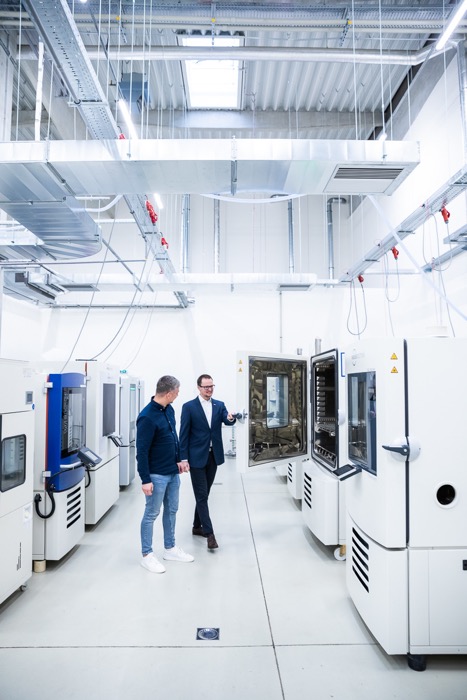
In operation, electronic systems are exposed to a wide range of mechanical, thermal and chemical influences that can fundamentally affect their functionality and service life. In our environmental testing laboratory we carry out comprehensive environmental testing according to applicable industrial, automotive (e.g. BMW GS-95011) and military standards (e.g. MIL-STD-810). In our materials testing laboratory we evaluate possible loosening of joints, failure of soldered points, formation of microcracks in PCBs or degradation of sensitive components.
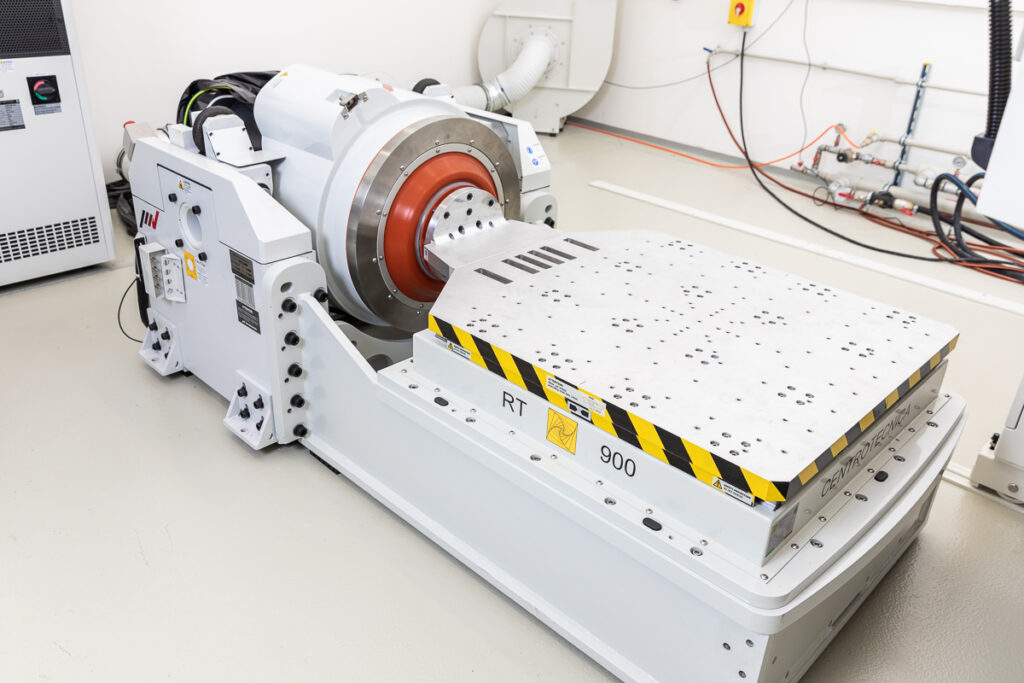
Tests with vibration and mechanical shocks simulate the dynamic loading to which electronic assemblies may be exposed during transport, operation within machinery, or from ambient environmental vibrations. These tests help to identify weak points in the design, such as loosening joints, microcracks in printed circuit boards or degradation of sensitive components. We carry them out over a range from low-frequency sinusoidal vibrations for verifying resonant frequencies to random vibration spectra simulating real operating conditions. For a comprehensive assessment of resistance we also offer combined tests, in which vibrations are applied simultaneously with controlled changes in temperature and humidity, ensuring maximum fidelity in simulating the operating environment.
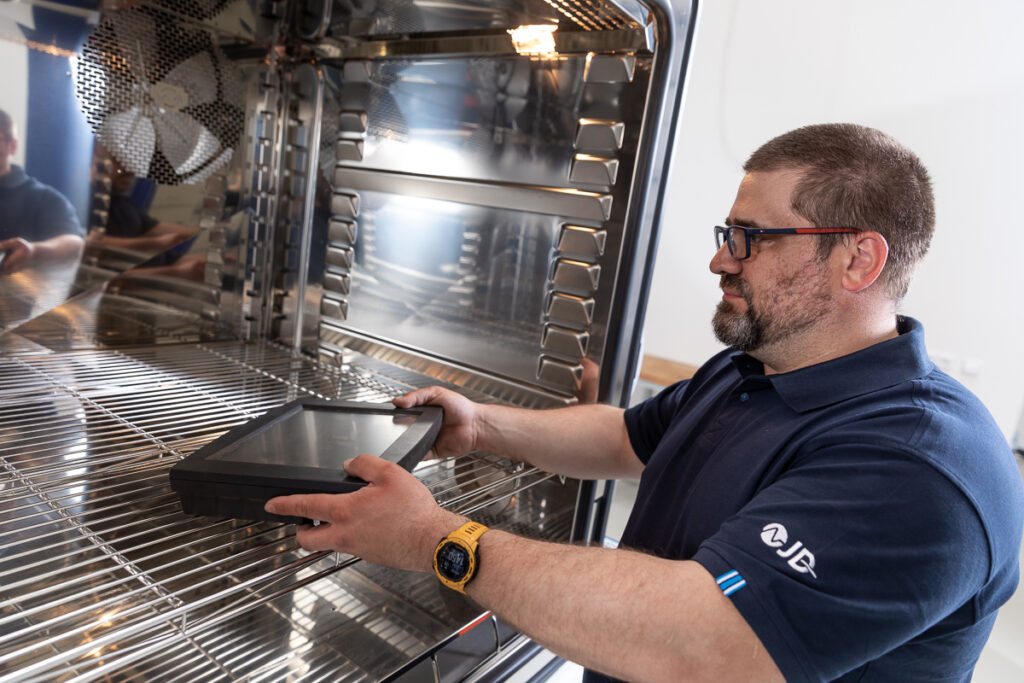
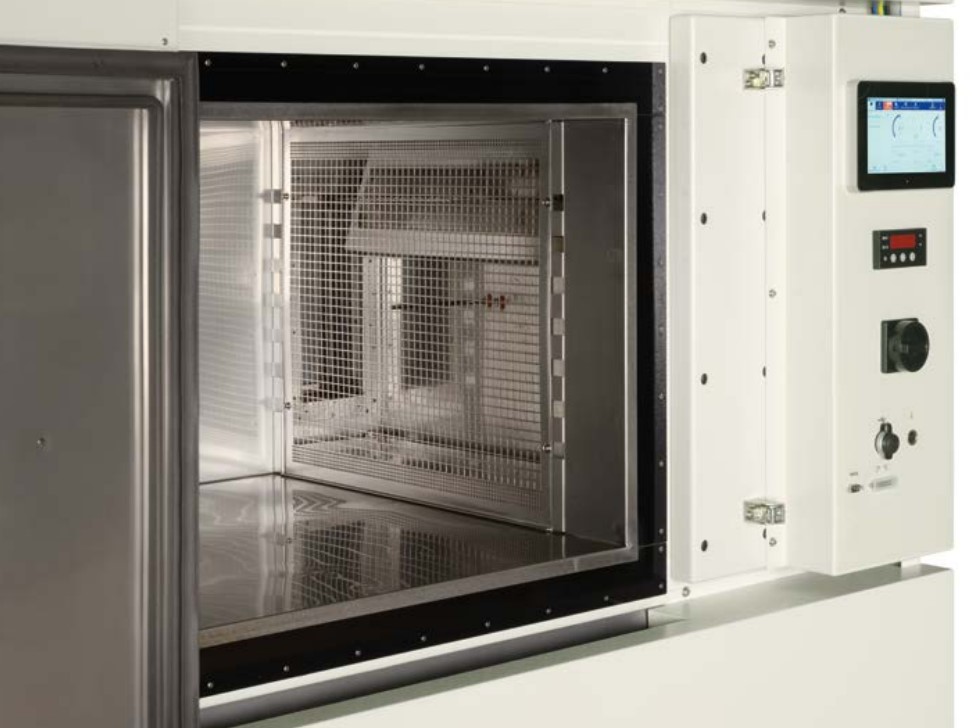
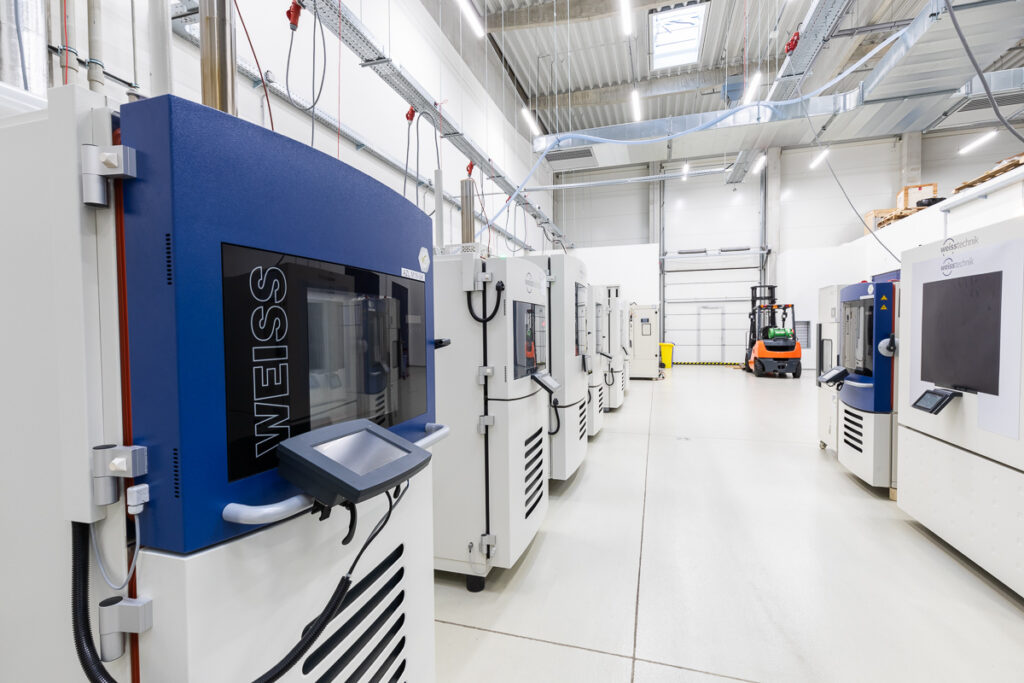
Climatic tests of high and low temperatures make it possible to verify the functionality, reliability and mechanical stability of equipment under extreme climatic conditions. We use programmable climatic chambers capable of simulating temperature ranges from arctic frosts far below freezing to tropical temperatures, with the option of precise control and monitoring of relative humidity. These tests can reveal thermal expansion and contraction of materials, changes in electrical parameters, mechanical stress in components, formation of microcracks, and degradation of seals or surface treatments. Thanks to long-term cyclic tests it is also possible to predict the service life of equipment in real operation and to reveal weak points before the product is placed on the market.
Thermal shock tests expose the tested samples to sudden and repeated transitions between extremely low and high temperatures within time intervals on the order of seconds to minutes. These conditions simulate demanding operating situations in which equipment faces abrupt climatic changes or thermal shocks arising when power components are switched on or off. We use two-chamber systems with direct mechanical transfer of the sample from the cooling section to the heating section and back, which make it possible to achieve a temperature difference of up to 300 °C without thermal delay. Such demanding testing verifies the resistance of soldered and bonded joints, layered materials, potting compounds, seals and sensitive semiconductor packages against thermal stress, cracking and delamination. The tests may also include continuous monitoring of electrical parameters during each cycle for early detection of faults.
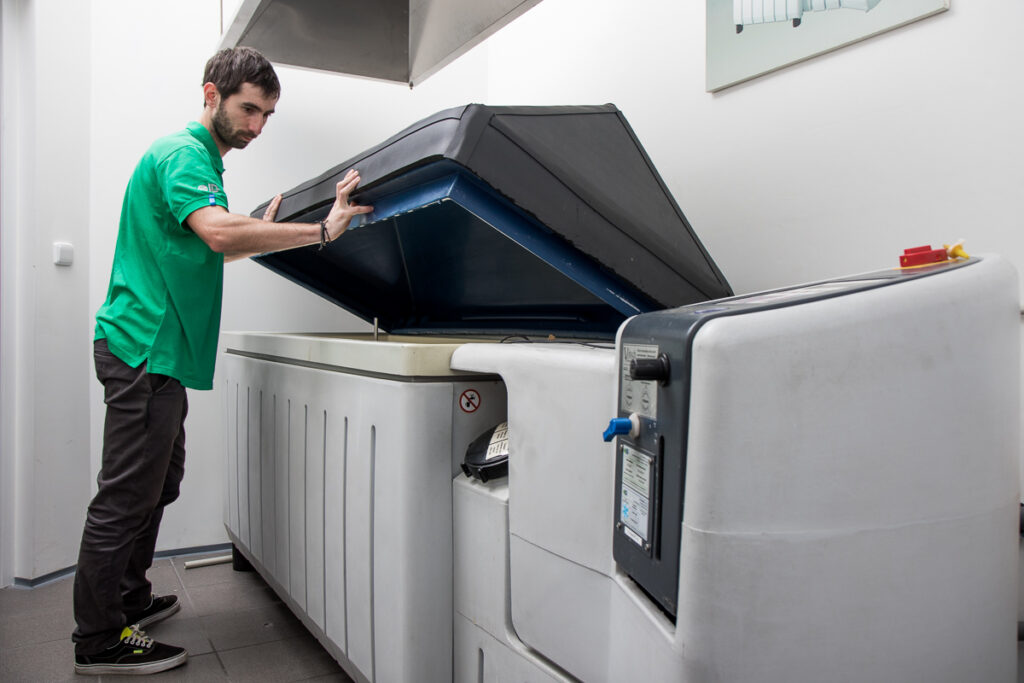
Corrosion tests simulate aggressive environments in which degradation of metal parts, surface treatments and protective coatings may occur. We use salt corrosion chambers to simulate the marine environment and industrial atmospheres, in particular according to the neutral salt spray (NSS) method. This test verifies resistance to long-term exposure to a finely dispersed salt aerosol at elevated temperature. Our offer also includes tests in a condensation atmosphere, which reproduce the effects of permanently high humidity and condensation of water on the surface of the test sample. Both types of test can be carried out separately or in combination with temperature cycles to achieve a more realistic simulation of the conditions to which products are exposed in operation.
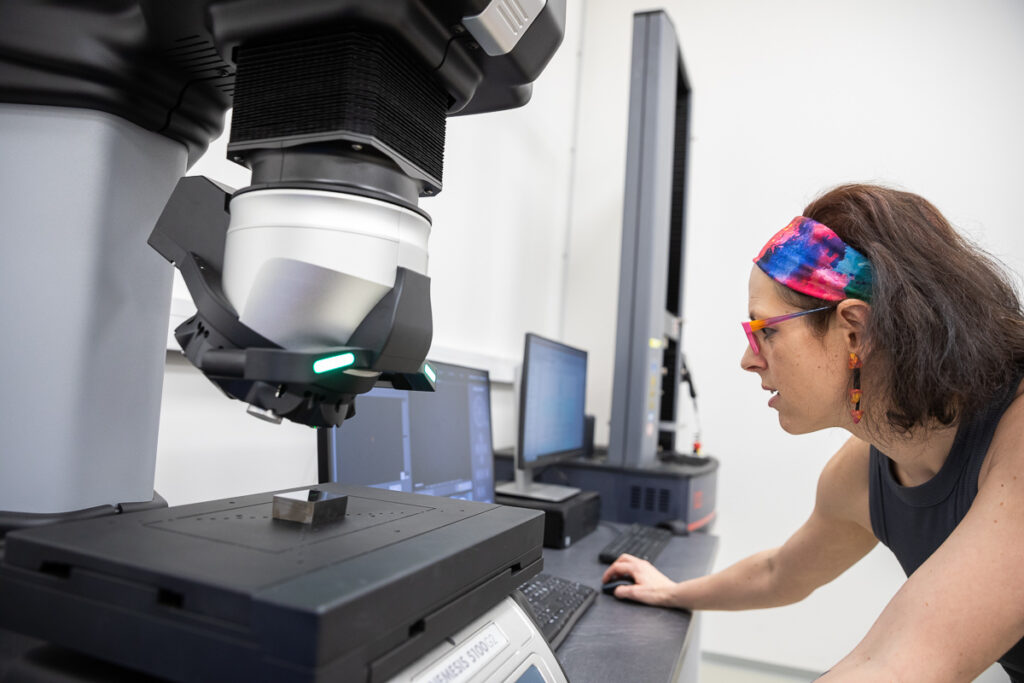
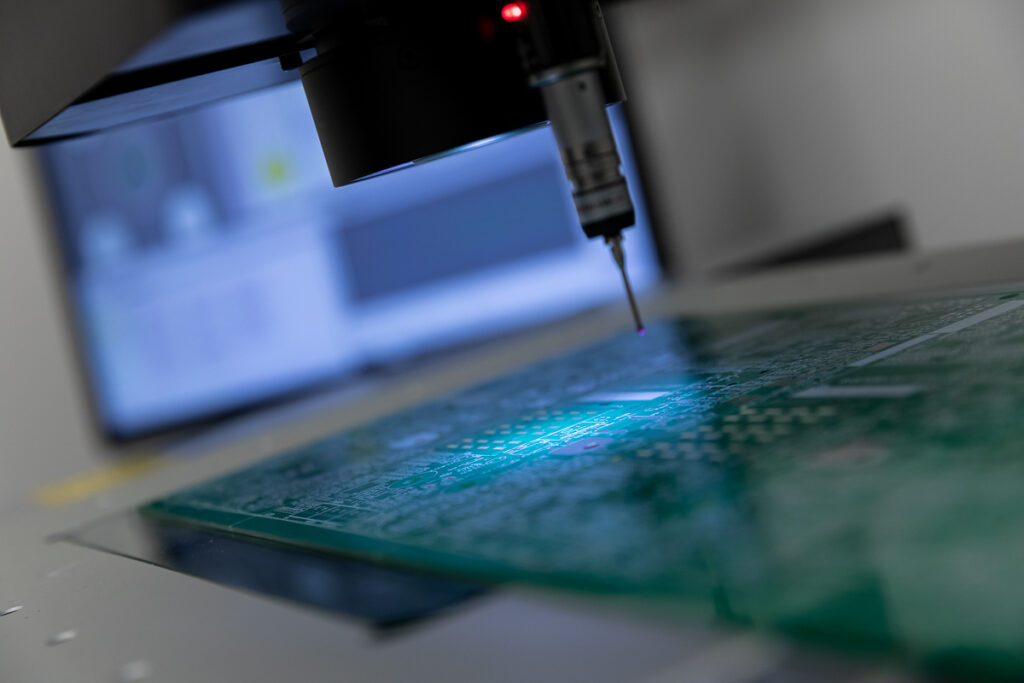
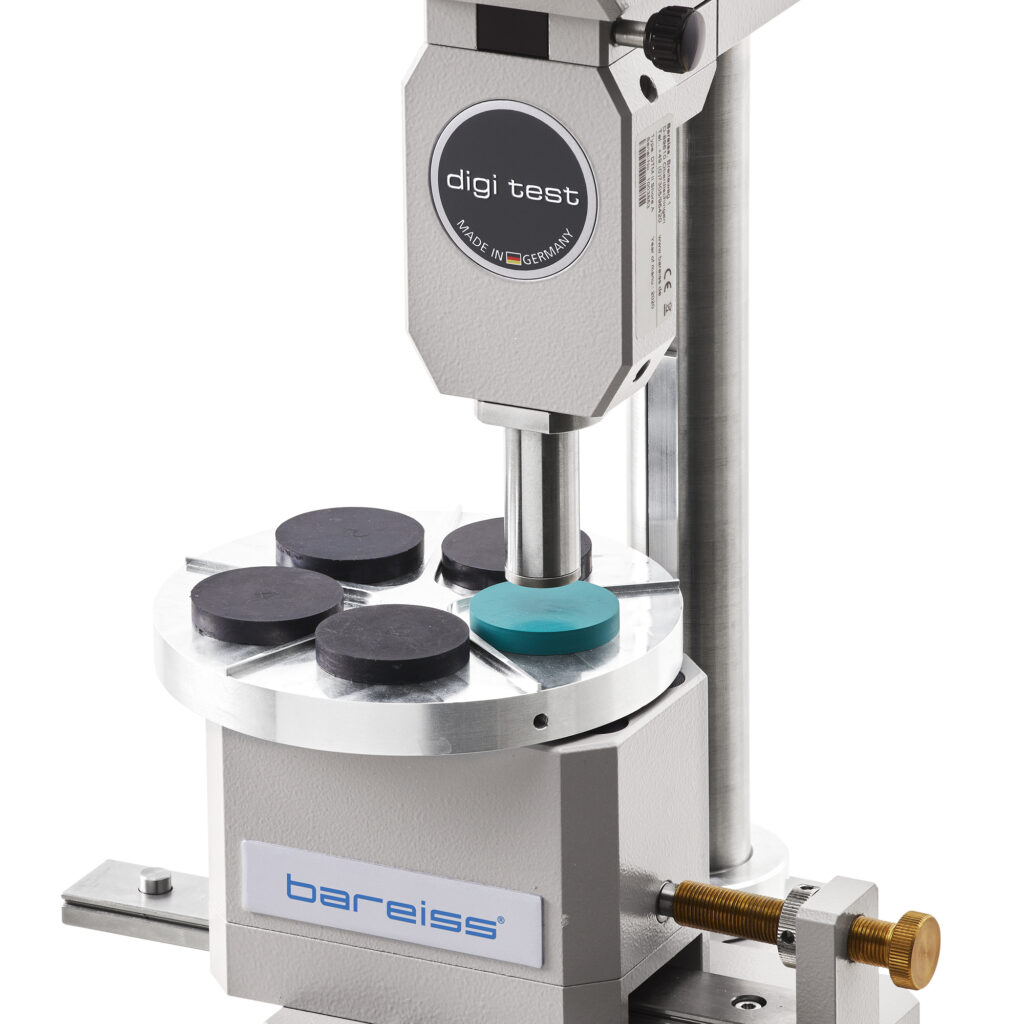
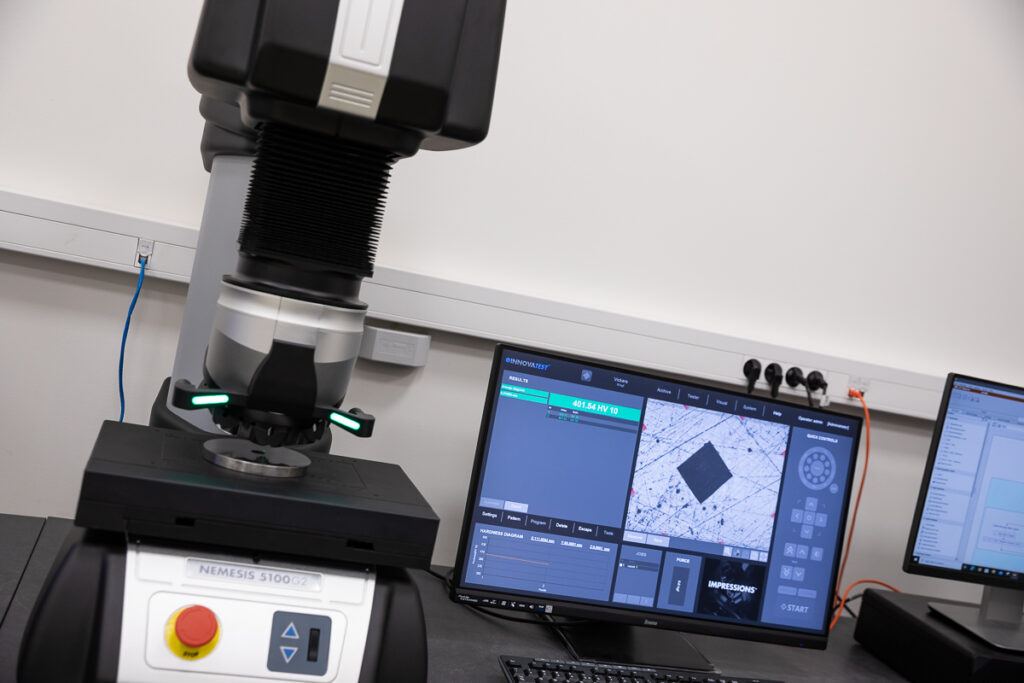
We perform hardness measurement using the Vickers and Knoop methods. Vickers and especially Knoop are ideal for very thin layers, small components or microstructural analysis. The Knoop test is particularly suitable for soft materials, thin coatings and layers, where deformation needs to be minimised.
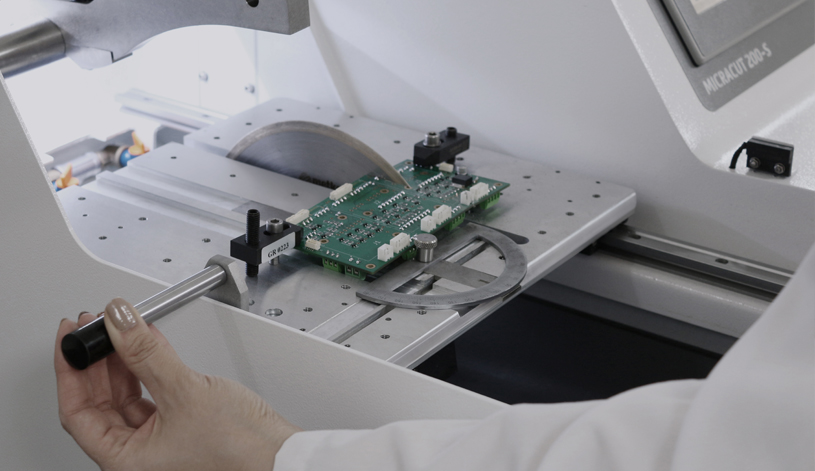
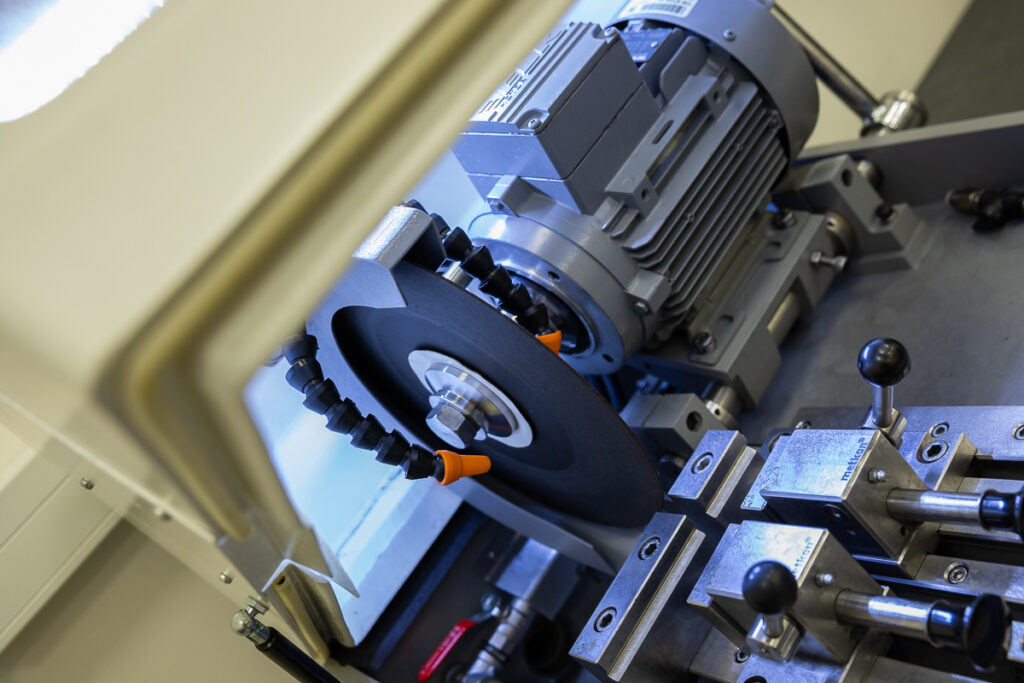
The preparation of printed circuit board (PCB) samples is key to the subsequent evaluation of the quality of manufacturing, soldering, layers and joints. The process includes precise cutting of selected areas, embedding in resin, grinding and polishing so that it is possible to analyse cross-sections of layers, soldered joints and any defects. The samples are then evaluated using microscopy and other analytical methods. This preparation is essential for quality control in the electronics industry, especially in manufacturing for the automotive, aerospace and medical sectors.
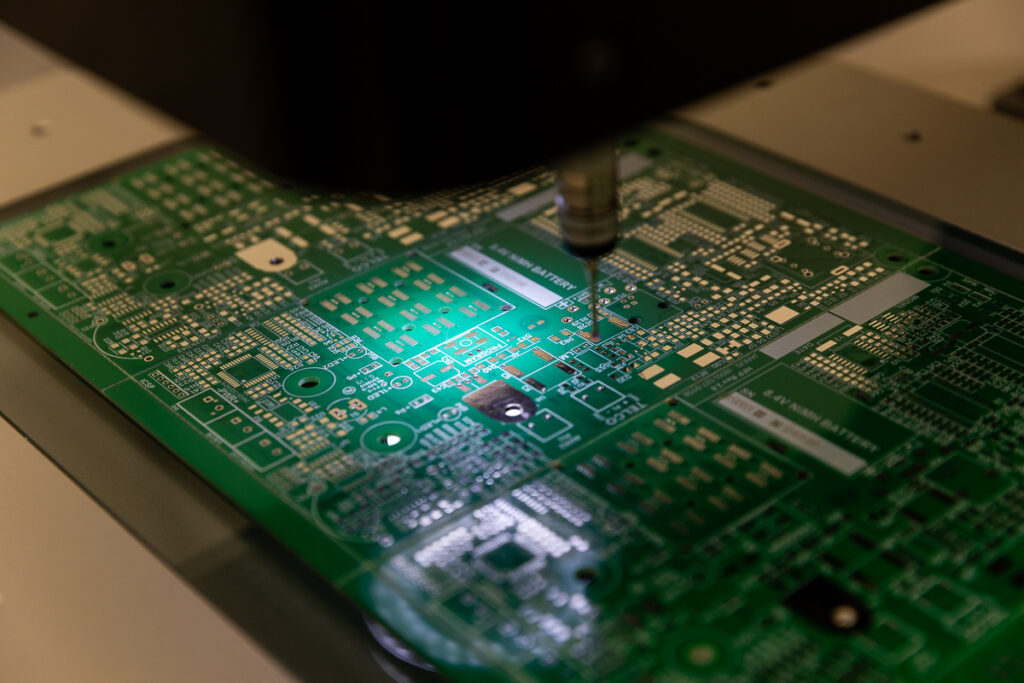
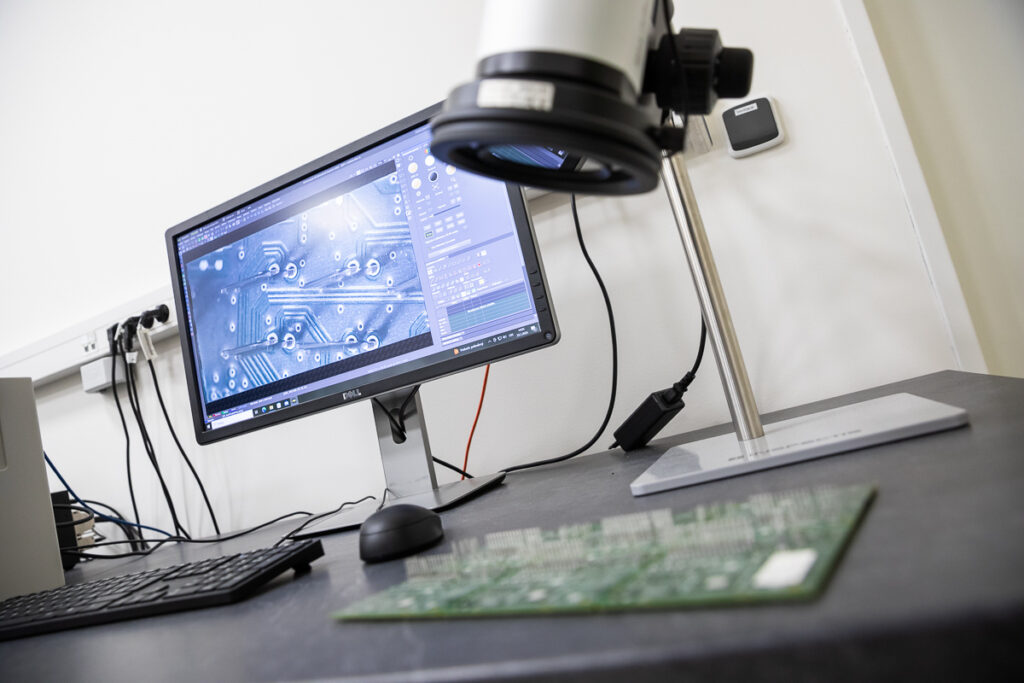
In the field of electronics we use light microscopy to analyse cross-sections of printed circuit boards (PCBs), soldered joints and metal layers. We evaluate the quality of joints, the presence of cracks, voids, cold joints and other defects that can affect the functionality of electronic assemblies. Microscopy is also used to evaluate degradation of surface layers, corrosion phenomena and wear. These methods are essential for ensuring the reliability of electronic devices, especially in the automotive, aerospace and medical industries.

We'll be happy to advise you.
Ing. Radek Lovětínský
Head of the testing laboratory
Our laboratory provides comprehensive testing of electronic systems in accordance with industrial, automotive and military standards. We offer environmental tests that include testing with vibration, mechanical shocks, temperature extremes, thermal shocks and corrosive influences. Using climatic and shock chambers we simulate real operating conditions to verify the resistance of equipment to dynamic and thermal loading. We also perform hardness tests using the Vickers and Knoop methods, preparation and analysis of PCB samples, microscopic evaluation of joints and surfaces, and inspection after thermal shocks. Our services are key to ensuring the quality and reliability of electronics in the automotive, aerospace and medical industries.
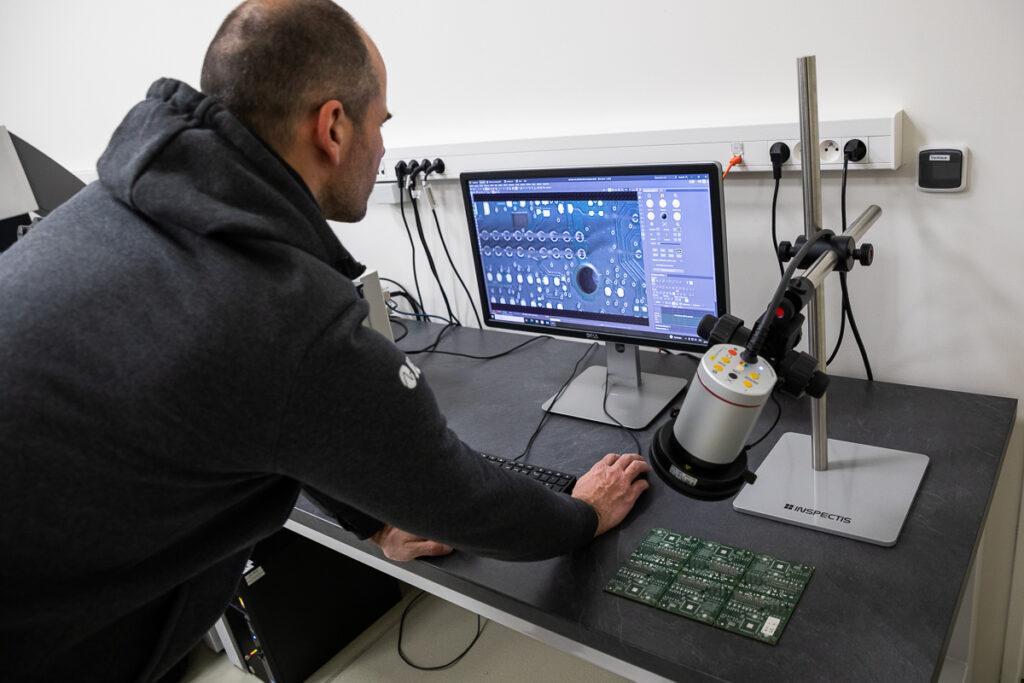
Samples stressed by thermal shocks can be inspected by us at certain frequencies under the microscope to check whether, for example, the contact of a soldered joint has been interrupted.
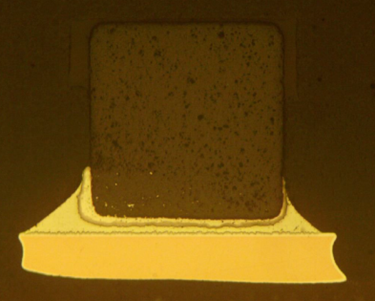
We evaluate the quality of joints, the presence of cracks, voids, cold joints and other defects that can affect the functionality of electronic assemblies.
Our testing laboratory offers accredited tests in the field of external environment simulation (we are accredited by the Czech Accreditation Institute in accordance with the ČSN EN ISO/IEC 17025:2018 standard), as well as further tests in accordance with industrial, automotive and military standards.
Tell us your testing requirements (e.g. via the inquiry form, email or phone).
We contact you and clarify the test specification and timeline.
You receive a structured price quotation from us.
After your order we reserve the date and capacity.
You deliver the samples to us in person or by courier.
We carry out the test on the reserved date.
After the test we send the test report electronically.
We'll gladly go through the test results with you.
„The testing chamber, and the staff's approach and willingness beyond requirements — I can only recommend them.“
„JD Dvořák — a company where the impossible does not exist and where it is not only about work. I am glad to have the honour of working with JD Dvořák.“


„We have worked with JD Dvořák for a long time in testing, the rental of climatic chambers, and the service and calibration of our equipment. We value the helpfulness and professionalism of the department heads and technicians we are in regular contact with during tests and the work carried out. Our technicians also make use of training in various areas of testing, which provides both an expansion of theoretical knowledge and practical demonstrations.“

„What I greatly appreciate is the personal approach to solving every problem. Whether it concerned specific testing requirements or the need for individual consultation, I was always met with willingness and expert help that led to a smooth and efficient collaboration. For me, JD Dvořák is not only a professional company, but also an excellent partner in research and education.“

„We have worked with JD Dvořák since 2020. Since then we have completed several installations together, and throughout they have provided service and the necessary calibrations, always at the highest professional level. They have also helped us with our special requirements and we can always rely on them. Their approach is not only professional and customer-oriented, but also very human, and the cooperation is always pleasant.“

„Cooperation with JD Dvořák is at an excellent level, as proven by more than 20 years of trouble-free collaboration.“

„You do good work — thank you for the long-term cooperation.“

„Thank you for the professional cooperation so far. You are a very reliable partner for us.“

This document contains key information about the tested sample and the course of the test. We provide the report in Czech or English according to your needs.
We issue both an accredited and a non-accredited test report according to customer requirements. The type of report is determined by the chosen testing standard.
Not sure how to test your sample? We'll help. We have years of experience and will recommend the most suitable procedure. And if you already know exactly what you want, we'll be your partner — without unnecessary questions.
Our equipment covers most requirements. If something is missing, thanks to our links with manufacturers of testing technology we can often arrange even specialised equipment outside our laboratory.
You can rely on both the equipment and our arrangements. We service and calibrate everything ourselves, so we can react quickly and adapt tests to get you results as soon as possible.
Every job is unique to us. We always try to understand your needs and tailor the service exactly to what you expect.
We'll be happy to advise you.
Ing. Radek Lovětínský
Head of the testing laboratory
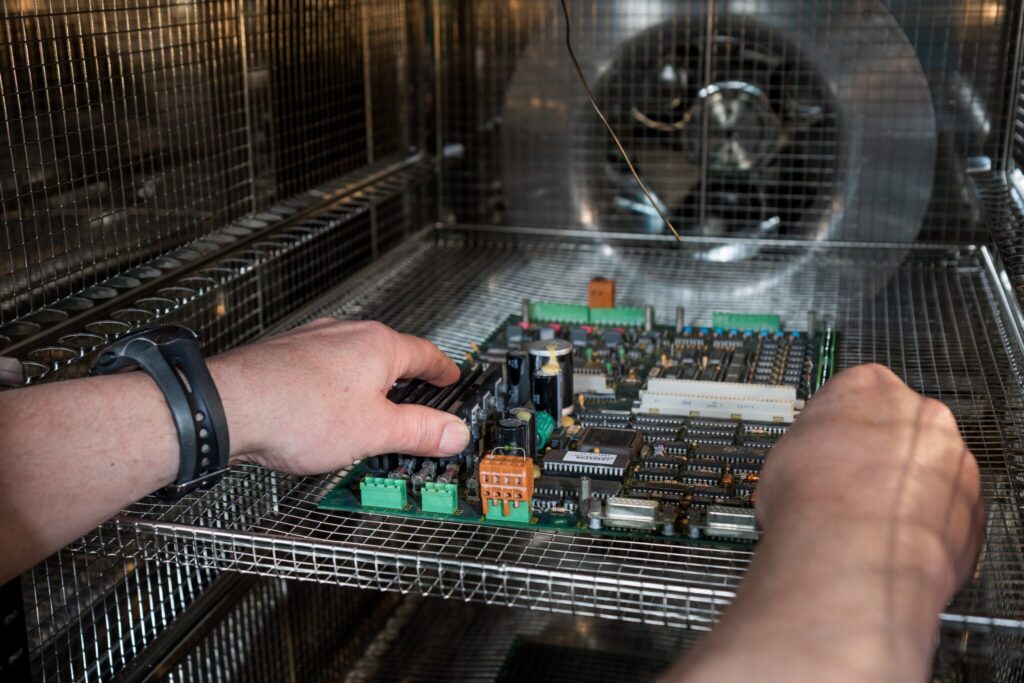
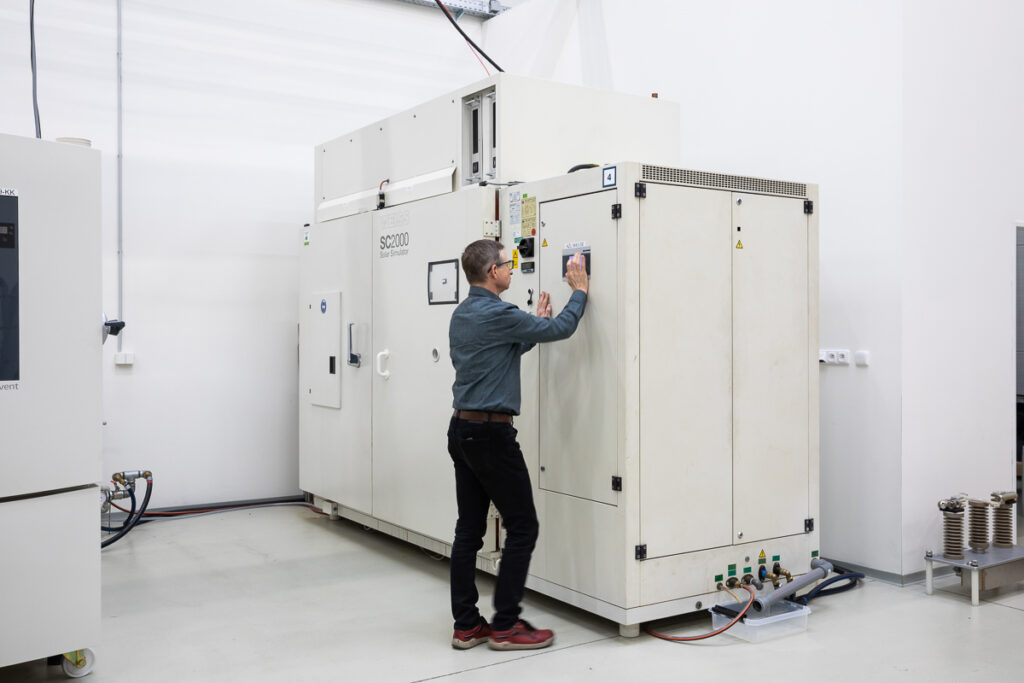
Testing with vibration, temperature cycles and shocks helps to reveal design weaknesses that might only manifest themselves in operation. It verifies the resistance of joints, materials and sensitive components against dynamic and thermal loading, thereby reducing the risk of failures and extending the service life of the equipment.
Climatic chambers make it possible to set temperatures from deep frosts to extreme heat, including controlled humidity. Shock chambers can then move a sample within a few seconds from a temperature of -80 °C to +220 °C and back, which simulates abrupt changes of environment as well as sudden thermal shocks.
Corrosion tests, for example neutral salt spray (NSS), simulate long-term exposure to a salt aerosol and verify the resistance of surface treatments to corrosion. Tests in a condensation atmosphere reproduce conditions of permanently high humidity and condensation, which is key for verifying protection against moisture degradation.
These methods are ideal for measuring the hardness of very thin layers, small components or soft materials, where deformation needs to be minimised.
We analyse the quality of soldered joints, metal layers, the presence of cracks, voids and other defects that can affect the functionality of the electronics.
Using microscopy we observe wear, corrosion phenomena and degradation of surface treatments, which is key to ensuring the reliability of the equipment.