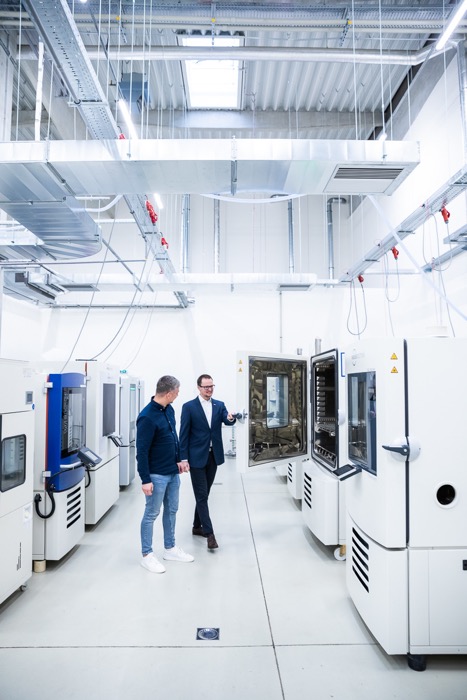
„The testing chamber, and the staff's approach and willingness beyond requirements — I can only recommend them.“
Tomáš Matús
Google review


Testing railway equipment is crucial for ensuring its safety, reliability and durability under the demanding conditions of railway operation. The tests are carried out according to strict standards, among the most important of which is EN 61373 – Shock and vibration tests for rolling stock. This standard defines the requirements for the resistance of equipment to the vibrations and mechanical shocks that occur both during normal operation and during exceptional events.
The EN 61373 standard divides equipment into categories according to its location in the vehicle. Category 1 is divided into Class A, which covers equipment mounted on the vehicle body that is less loaded by vibration, Class B represents equipment that is also mounted on the body but requires stricter tests. Category 2 concerns equipment mounted on the bogie and Category 3 equipment mounted directly on the axle, where the vibrations are most intense. For each category, specific vibration profiles and load values are defined according to orientation (vertical, transverse, longitudinal).
The random vibration test simulates real operating loads in three axes. The standard specifies effective acceleration values for each category. For example, for Class A a value of 4.25 m/s² is prescribed in the vertical axis, whereas for equipment mounted on the axle (Category 3) the vibrations are extreme – up to 144 m/s² in the vertical axis. These vibrations are applied for a period of 5 hours in each axis.
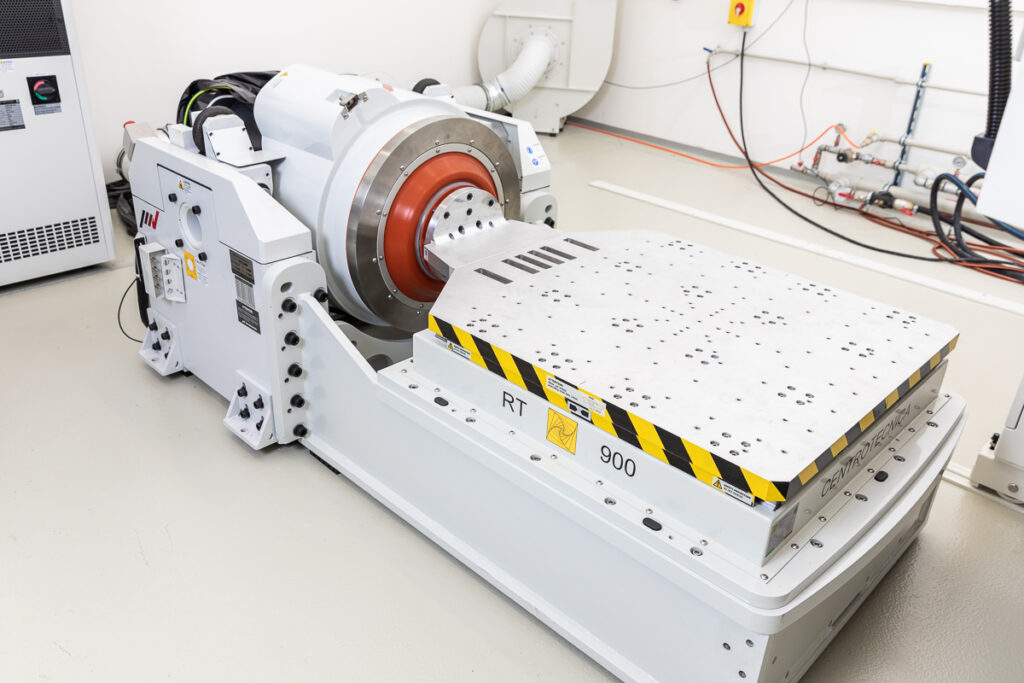
Mechanical shocks according to EN 61373 represent sudden and short-term impacts that occur, for example, during starting or braking. These tests are performed as a series of pulses in a defined direction, shape and amplitude – a half-sine with parameters of up to 30 m/s² for a duration of 30 ms. For equipment mounted on the axle, an extreme shock with an acceleration of up to 1000 m/s² with a duration of 6 ms is expected, which represents one of the most demanding loads on the mechanical structure and fastening.
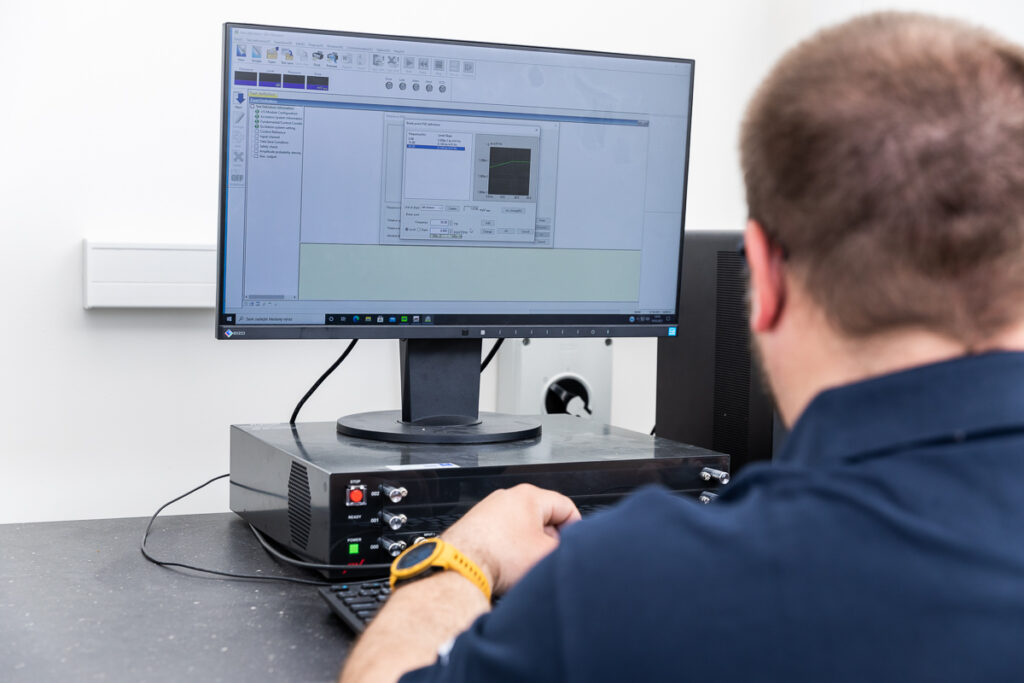
Temperature tests are not part of the EN 61373 standard, which focuses exclusively on mechanical influences. In practice, however, customers often require additional climatic tests, for example according to the standards EN 60068-2-1, EN 60068-2-2 or EN 60068-2-30, which verify the resistance of equipment during storage and operation under extreme conditions. Typically this involves long-term storage at low or high temperatures (e.g. -40 °C to +85 °C), or in a humid environment with condensation. These tests help to reveal problems with materials, the sealing of enclosures, or the long-term stability of electronic components.

We'll be happy to advise you.
Ing. Radek Lovětínský
Head of the testing laboratory
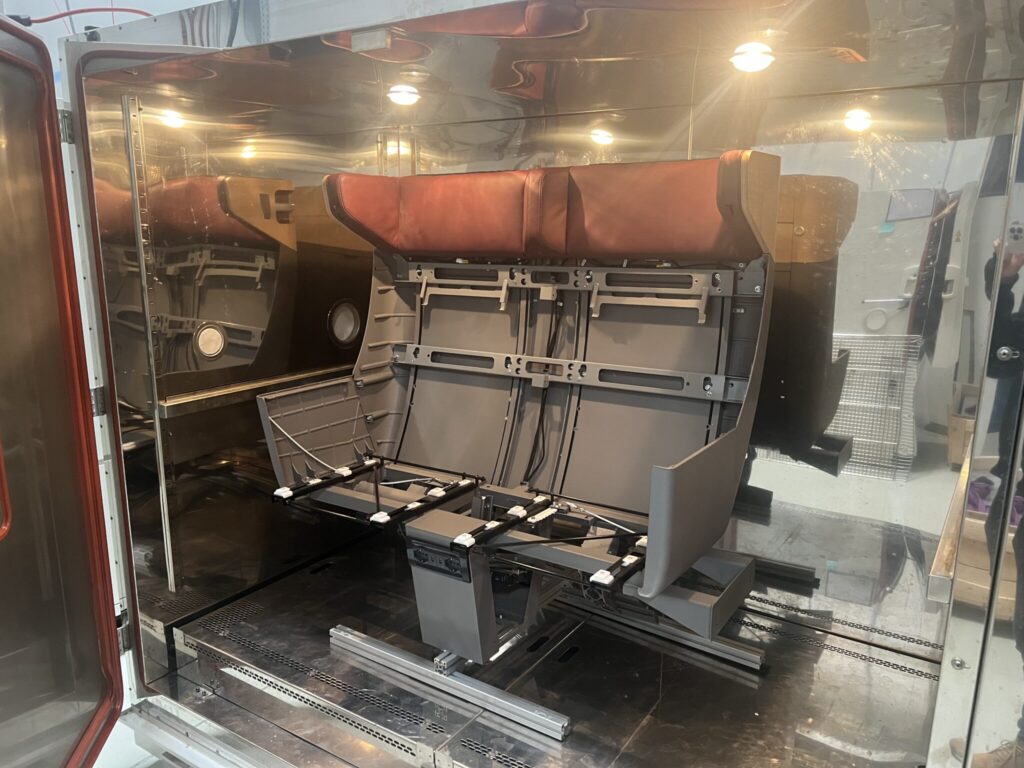
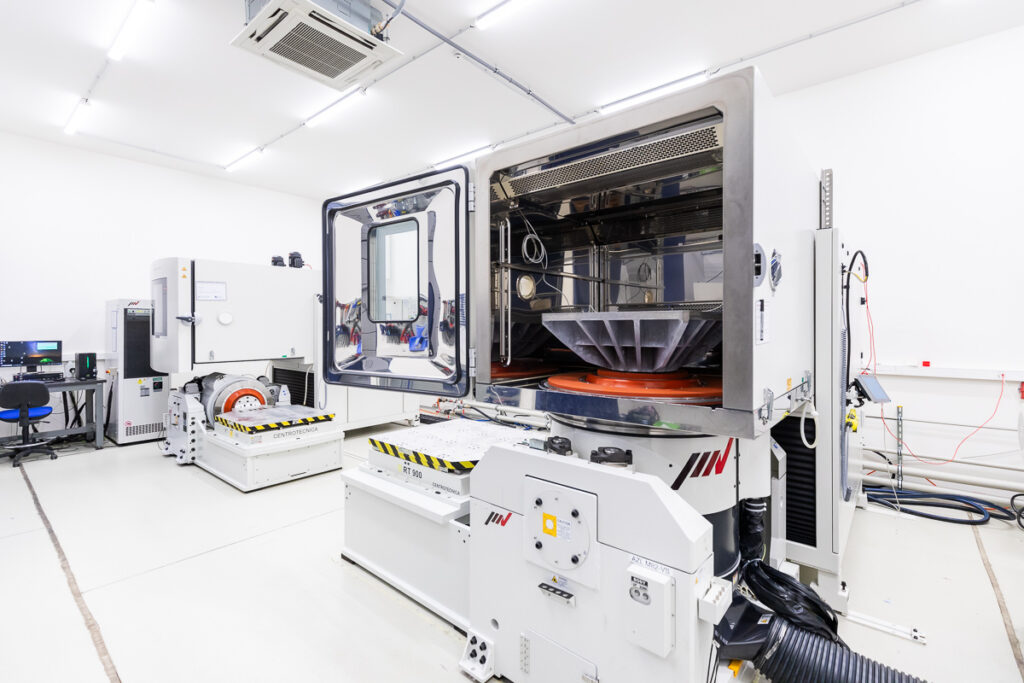
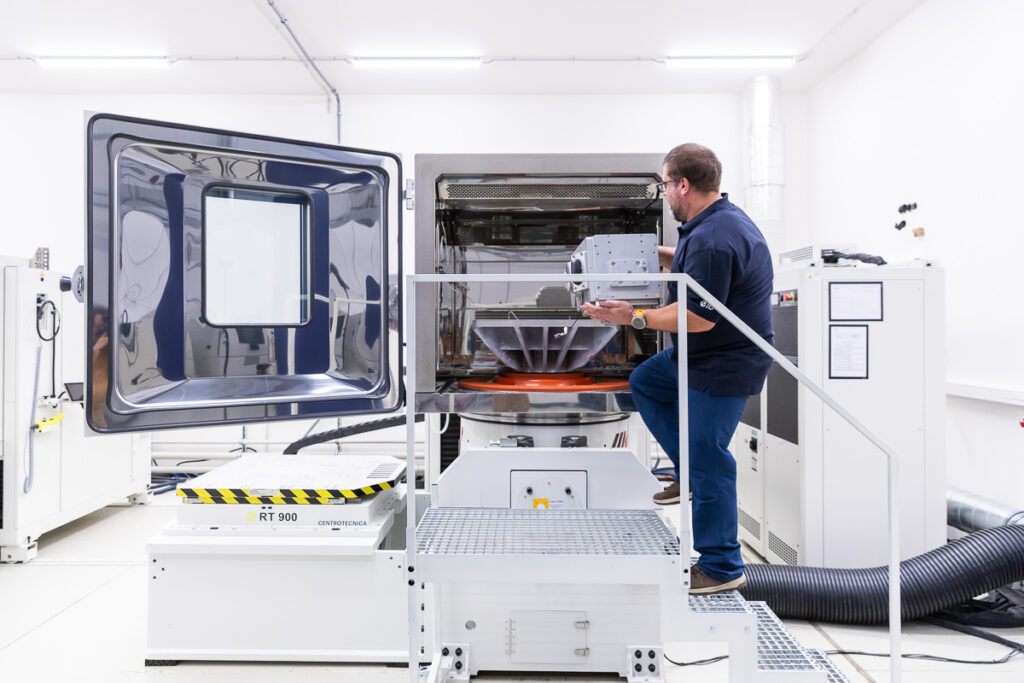
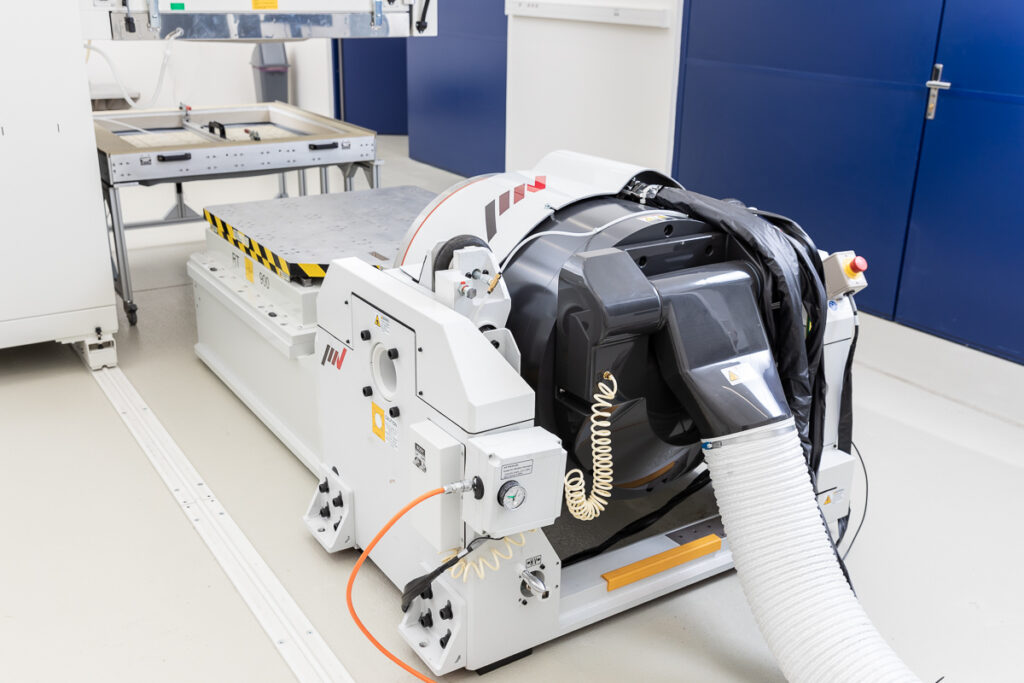
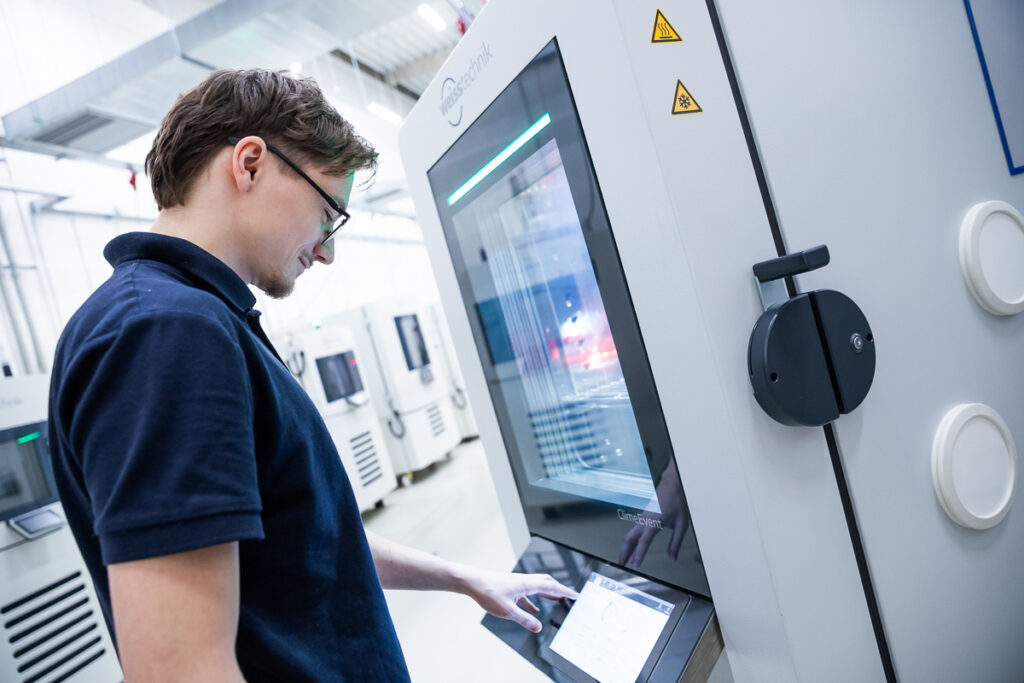
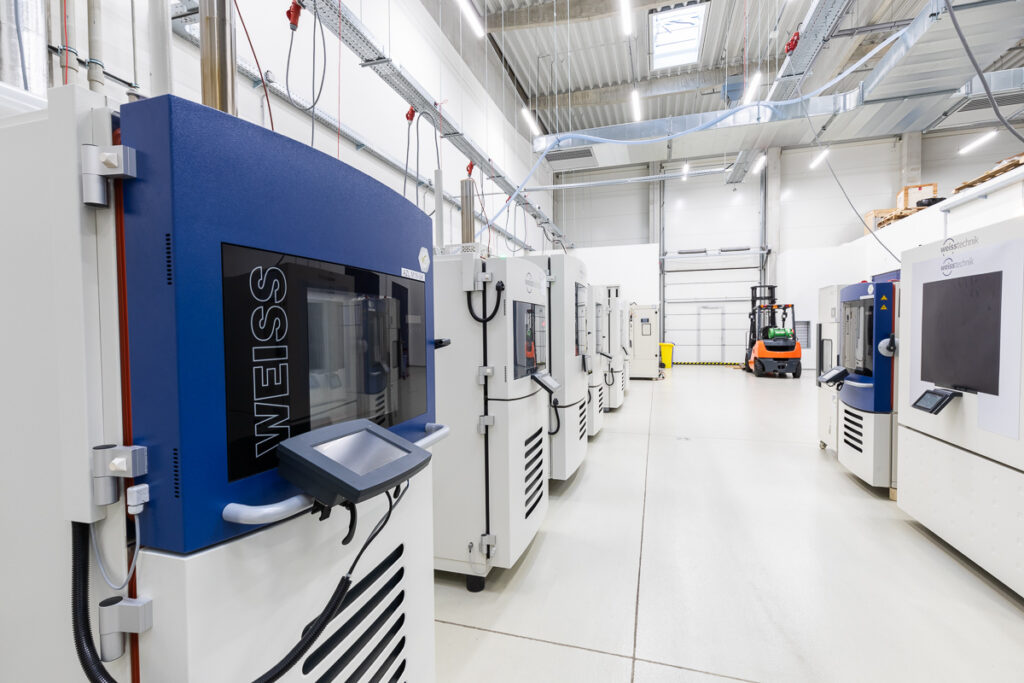
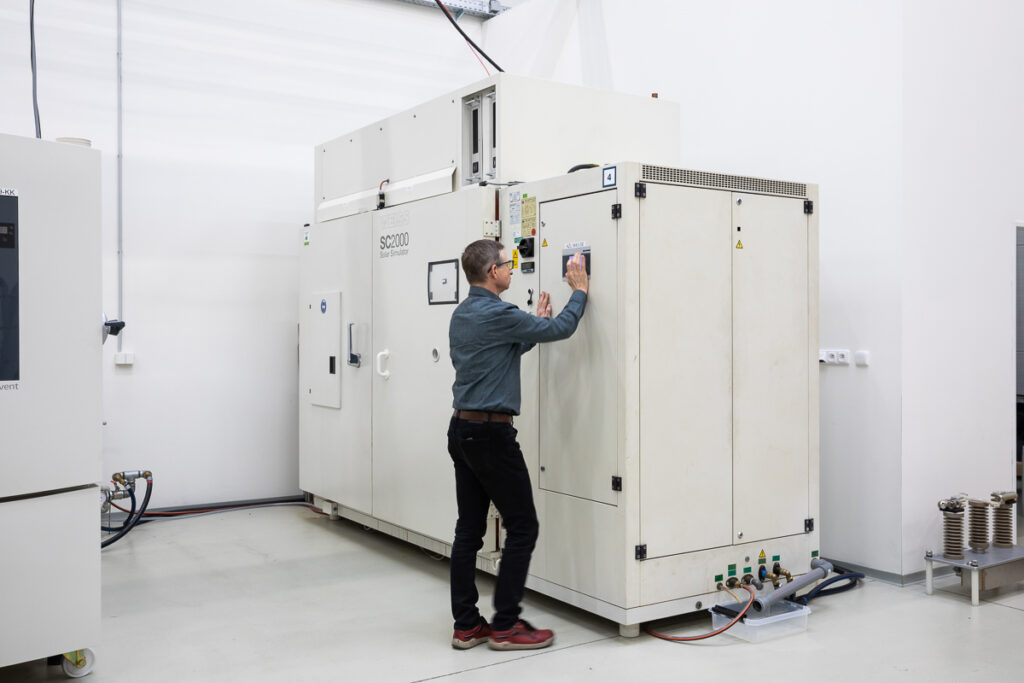
In our laboratory we perform vibration and climatic tests according to internationally recognised standards, or to the customer’s specification. During the test the tested samples can be actively powered, controlled or have their response measured in real time. We have a fully integrated system available that connects the vibration equipment with a temperature and humidity chamber. We record the course of the test using the K2+ and S!MPATI software, including the measurement of acceleration, temperature or humidity on the sample. The customer can be present in person throughout the entire test and follow its course in real time.
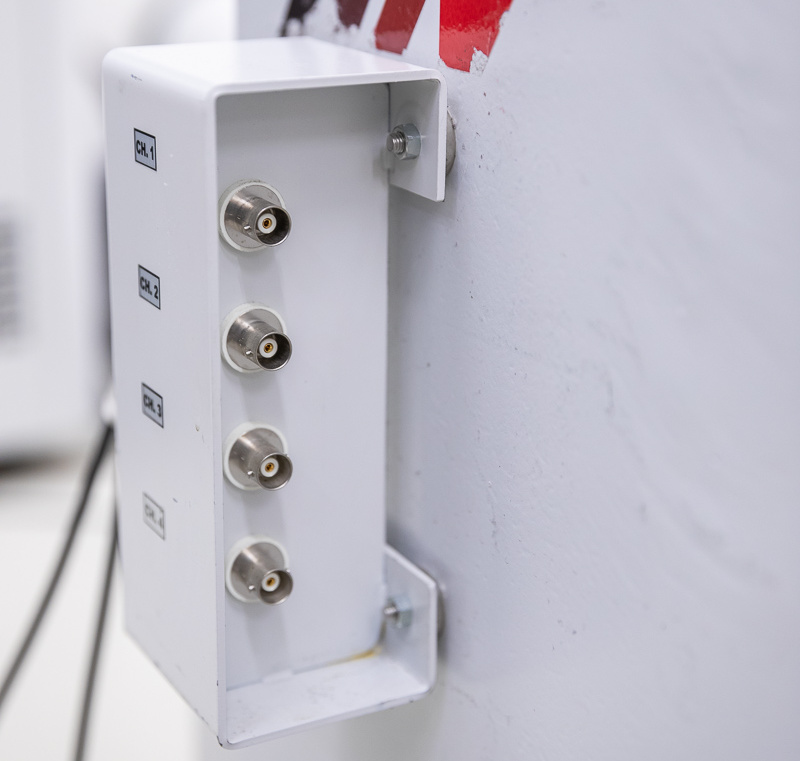
For better analysis of the sample's behaviour, we are able to measure acceleration on up to 20 channels, which means, for example, a combination of 2 single-axis accelerometers for control and 6 triaxial accelerometers on the sample.
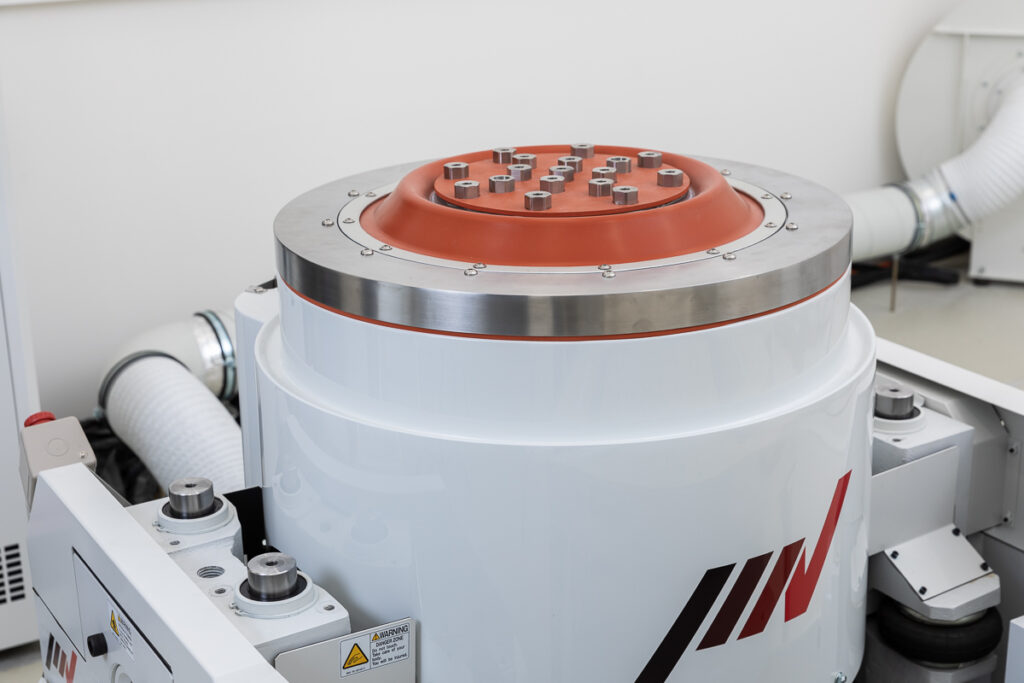
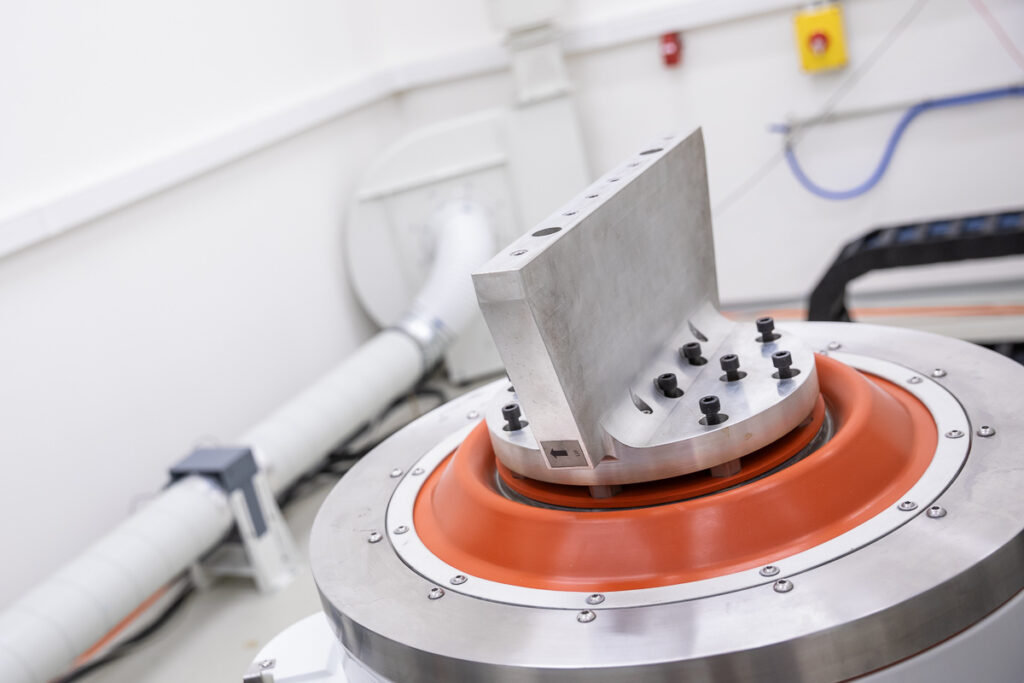
On our vibration system we are able to develop acceleration up to 1000 m/s2 to simulate the mechanical conditions on the axle of a rail vehicle when the sample is clamped directly onto the shaker armature.
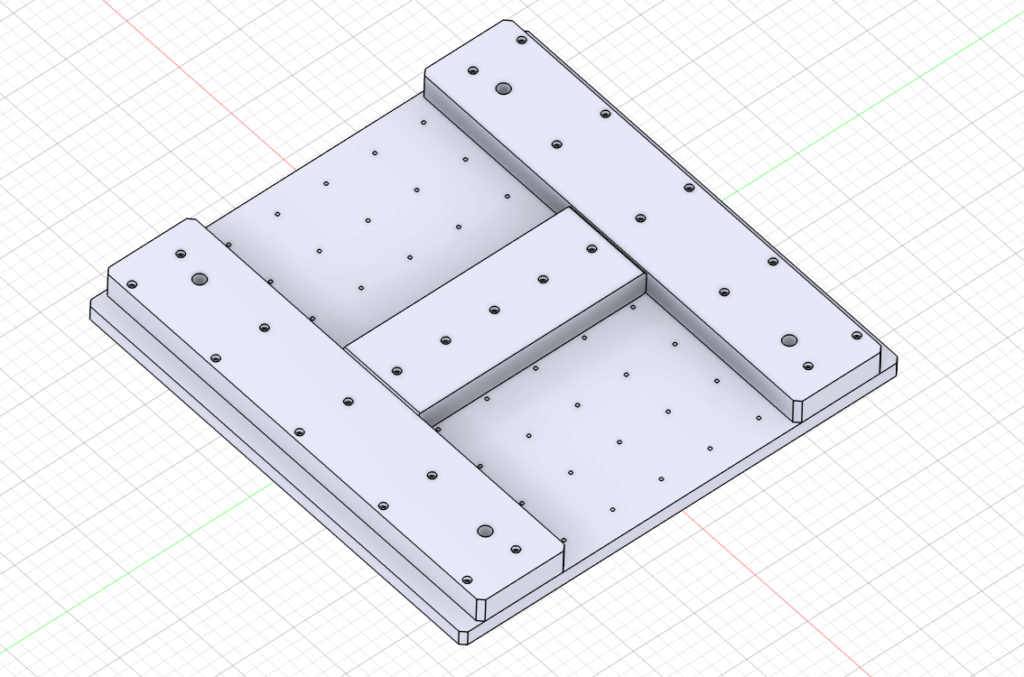
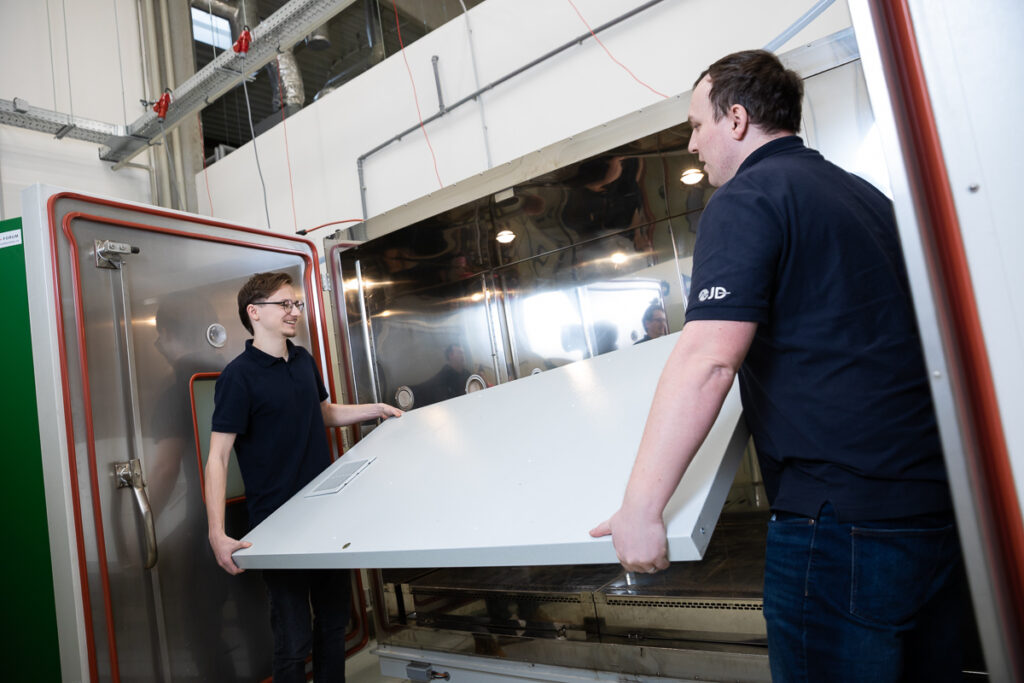
If the clamping holes of the sample do not match the pattern of clamping holes on the vibration system, we will arrange the design and manufacture of a clamping fixture for you.
The current valid version of the EN 61373 standard dates from 2011. However, in view of customer requirements we are able to carry out tests in an accredited manner even according to older versions of this standard – specifically from 1999, or 2002. In this way we ensure full compatibility even with projects that were designed and certified according to earlier revisions of the standards.
Tell us your testing requirements (e.g. via the inquiry form, email or phone).
We contact you and clarify the test specification and timeline.
You receive a structured price quotation from us.
After your order we reserve the date and capacity.
You deliver the samples to us in person or by courier.
We carry out the test on the reserved date.
After the test we send the test report electronically.
We'll gladly go through the test results with you.
„The testing chamber, and the staff's approach and willingness beyond requirements — I can only recommend them.“
„JD Dvořák — a company where the impossible does not exist and where it is not only about work. I am glad to have the honour of working with JD Dvořák.“


„We have worked with JD Dvořák for a long time in testing, the rental of climatic chambers, and the service and calibration of our equipment. We value the helpfulness and professionalism of the department heads and technicians we are in regular contact with during tests and the work carried out. Our technicians also make use of training in various areas of testing, which provides both an expansion of theoretical knowledge and practical demonstrations.“

„What I greatly appreciate is the personal approach to solving every problem. Whether it concerned specific testing requirements or the need for individual consultation, I was always met with willingness and expert help that led to a smooth and efficient collaboration. For me, JD Dvořák is not only a professional company, but also an excellent partner in research and education.“

„We have worked with JD Dvořák since 2020. Since then we have completed several installations together, and throughout they have provided service and the necessary calibrations, always at the highest professional level. They have also helped us with our special requirements and we can always rely on them. Their approach is not only professional and customer-oriented, but also very human, and the cooperation is always pleasant.“

„Cooperation with JD Dvořák is at an excellent level, as proven by more than 20 years of trouble-free collaboration.“

„You do good work — thank you for the long-term cooperation.“

„Thank you for the professional cooperation so far. You are a very reliable partner for us.“

This document contains key information about the tested sample and the course of the test. We provide the report in Czech or English according to your needs.
We issue both an accredited and a non-accredited test report according to customer requirements. The type of report is determined by the chosen testing standard.
Not sure how to test your sample? We'll help. We have years of experience and will recommend the most suitable procedure. And if you already know exactly what you want, we'll be your partner — without unnecessary questions.
Our equipment covers most requirements. If something is missing, thanks to our links with manufacturers of testing technology we can often arrange even specialised equipment outside our laboratory.
You can rely on both the equipment and our arrangements. We service and calibrate everything ourselves, so we can react quickly and adapt tests to get you results as soon as possible.
Every job is unique to us. We always try to understand your needs and tailor the service exactly to what you expect.
We'll be happy to advise you.
Ing. Radek Lovětínský
Head of the testing laboratory
The EN 61373 standard applies to electrical, electronic and mechanical equipment intended for installation in railway transport vehicles – for example control units, sensors, switchboards, displays, air-conditioning technology, battery systems and other components. The tests can be carried out for series production as well as for development or type verification.
The classification corresponds to the location of the equipment in the vehicle: Class A/B: mounting on the vehicle body (lower vibration) Category 2: mounting on the bogie Category 3: mounting on the axle (highest vibration and shocks) Each category has prescribed specific levels of vibration and types of test.
Yes. In addition to mechanical vibration and shocks, we also offer supplementary climatic tests – e.g. storage tests, high humidity, temperature extremes or corrosion resistance according to the EN 60068 standards. These tests are often required by customers as part of comprehensive product validation.
Yes. In addition to the current version EN 61373:2011, we also perform tests according to the older versions from 1999 and 2002. We are able to carry out these tests in an accredited manner and issue a valid accredited report for them, which is advantageous especially for equipment designed or approved according to older requirements.