„The testing chamber, and the staff's approach and willingness beyond requirements — I can only recommend them.“
Tomáš Matús
Google review


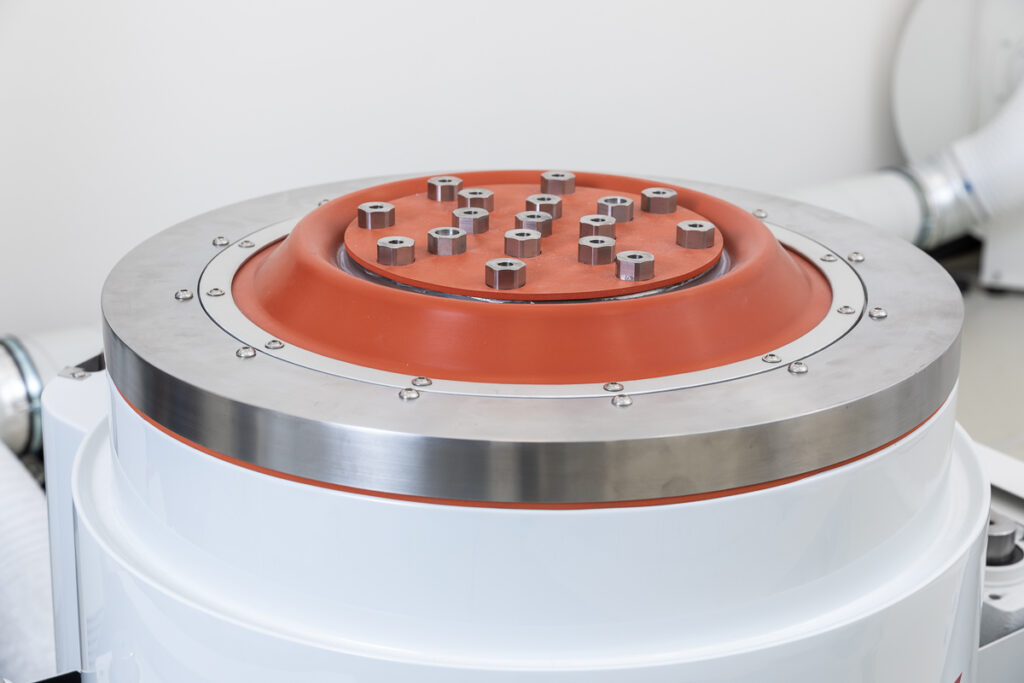
In our laboratory we carry out vibration tests in order to verify the mechanical resistance and functionality of products when subjected to dynamic forces. The tests are suitable for components, sub-assemblies and complete products that may be exposed to vibrations during their service life – whether during transport, ordinary operation or in demanding environments. Vibration testing helps to identify weak points, prevent product failure and increase reliability.
Vibration tests simulate the mechanical stress to which a product may be exposed during transport, operation or shock events. Their purpose is to verify structural resistance, functionality and reliability under real and even extreme conditions. Depending on the nature of the load, we distinguish several types of tests – from controlled sinusoidal vibrations through random profiles to dynamic shocks. Each type has its specific use – for example to identify resonances, resistance to shocks or accelerated ageing. We choose the appropriate test mode based on the customer's requirements, standards or a simulation of the product's real use.
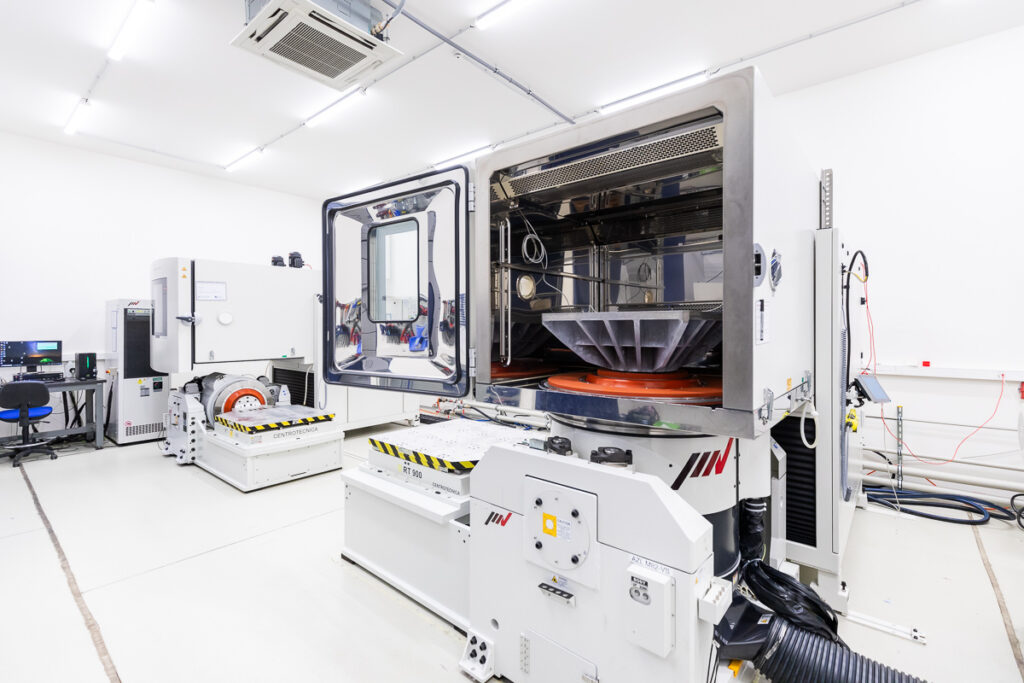
Superimposed vibration tests, such as Sine on Random, Random on Random and Multisine, serve to simulate the complex mechanical stress that commonly arises in real operation.
Sine on Random combines a harmonic signal with a random background and is used, for example, to simulate vibrations from engines or gearboxes.
Random on Random works with two independent random spectra at once and enables a very realistic simulation of multiple vibration sources.
Multisine then uses the simultaneous action of several sinusoidal frequencies at once and is ideal for fast and targeted loading of specific frequency bands.
These tests help to verify in detail the reliability of products under conditions that ordinary tests often do not cover.

We'll be happy to advise you.
Ing. Radek Lovětínský
Head of the testing laboratory
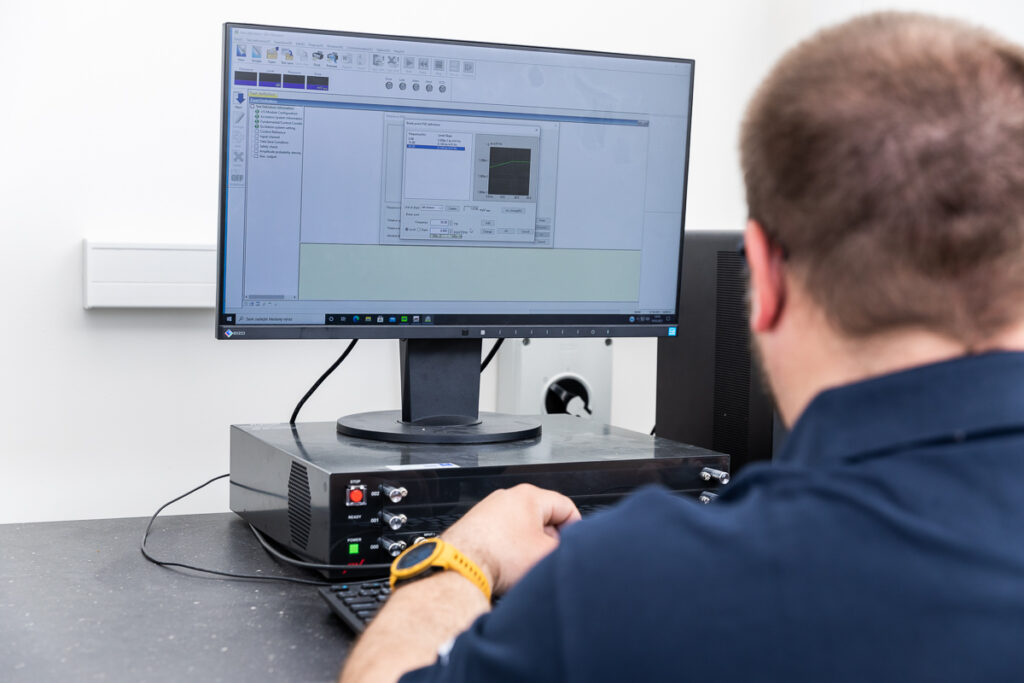
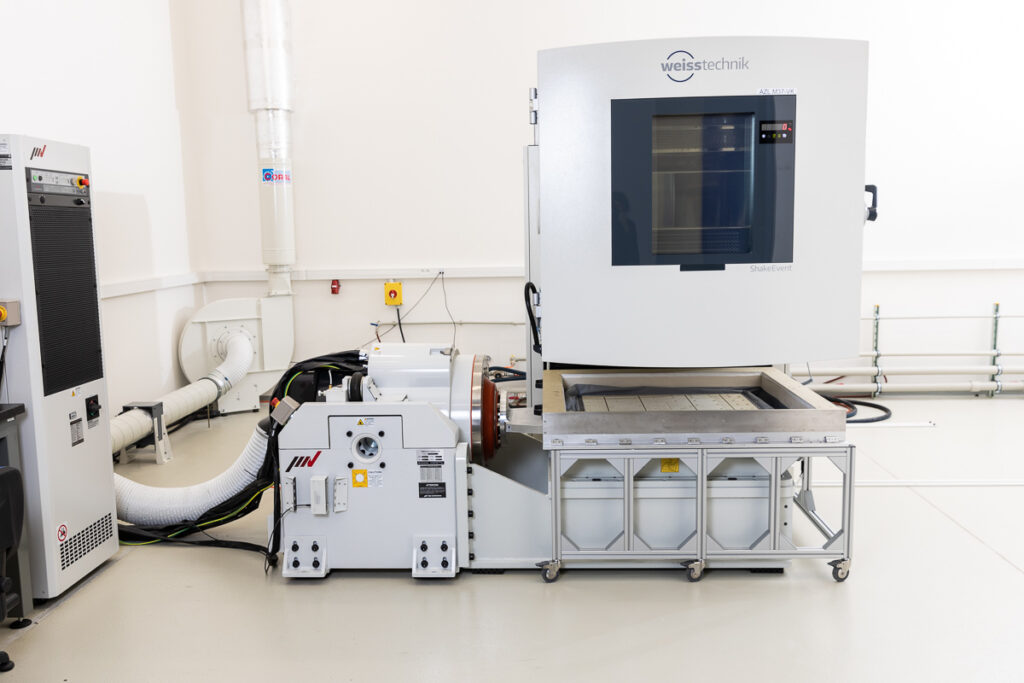
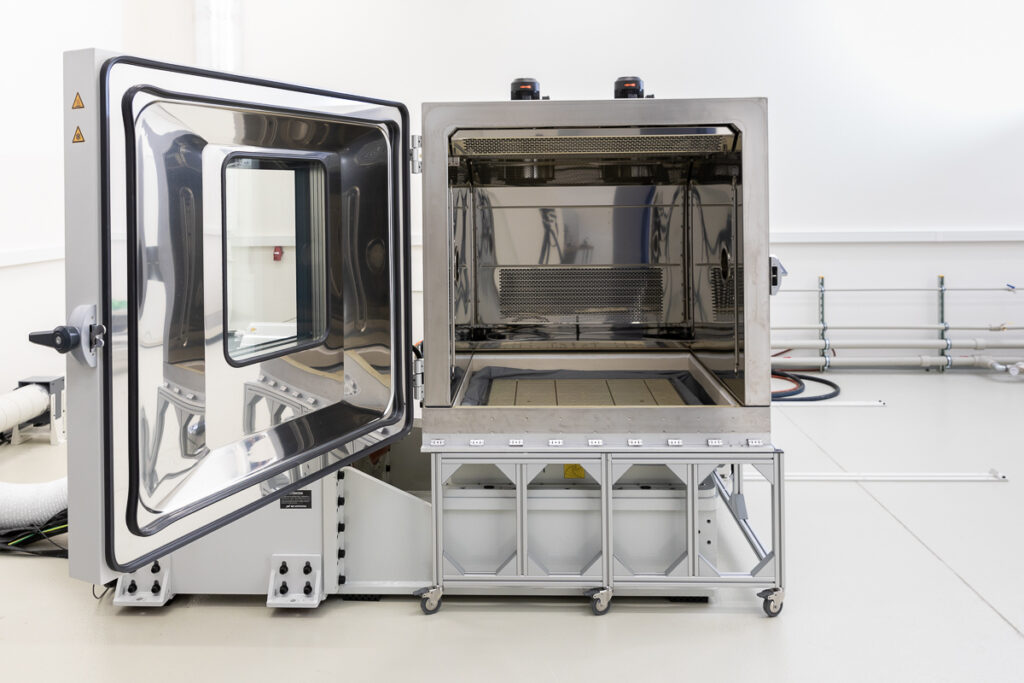
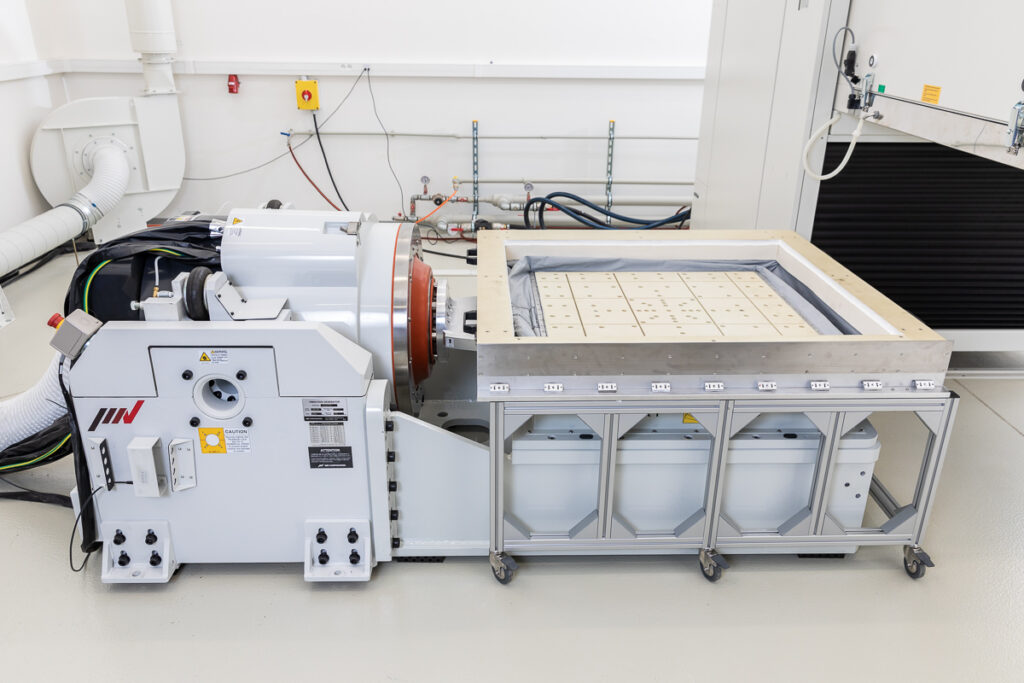
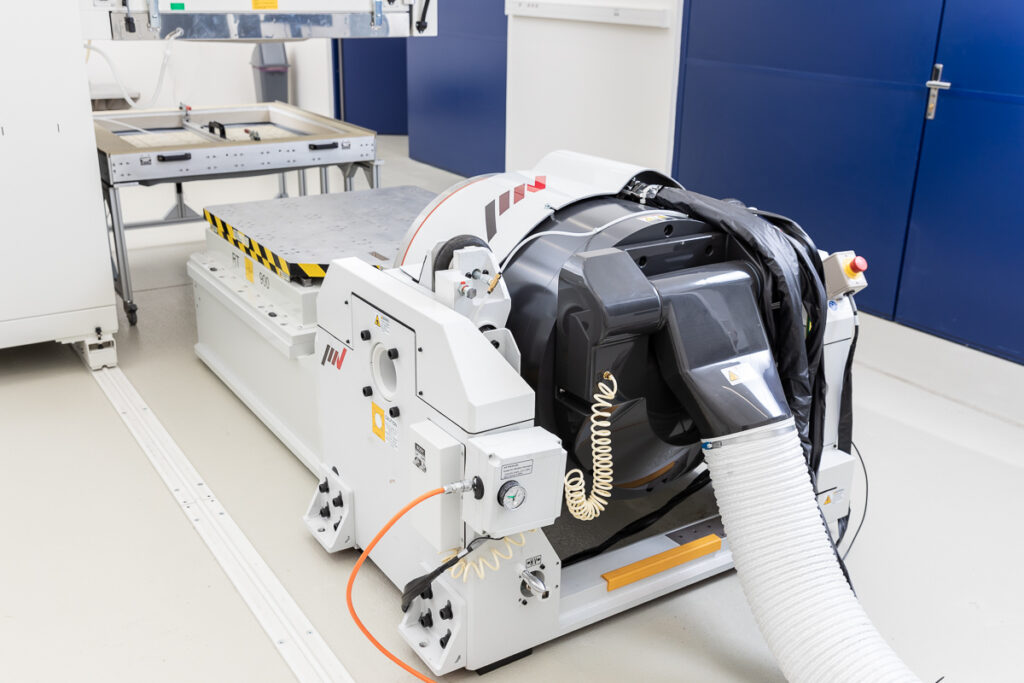
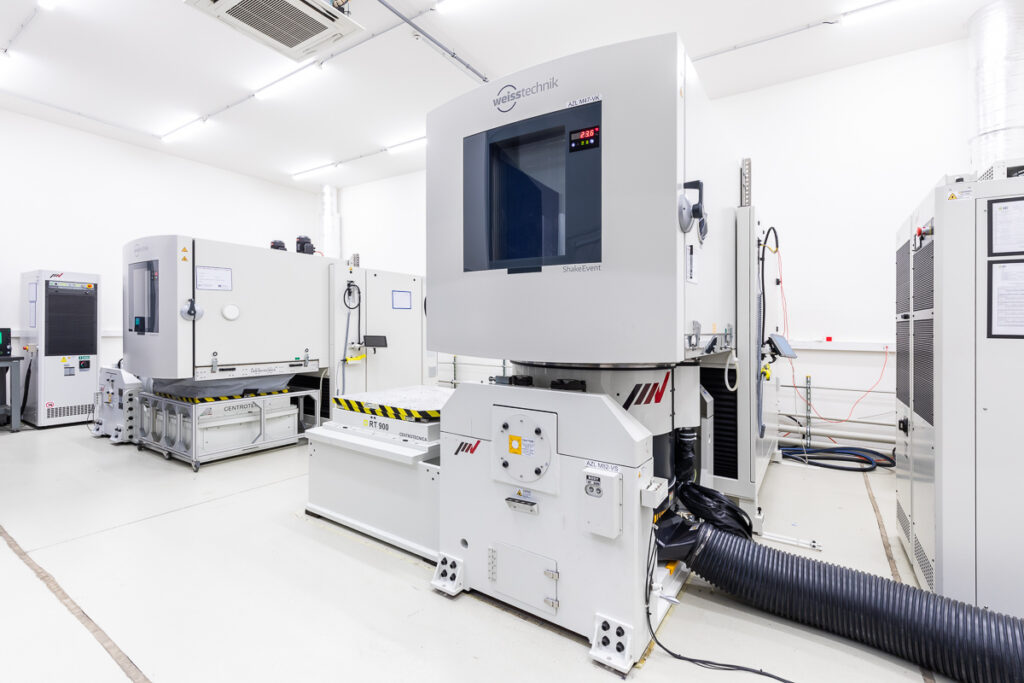
In our laboratory we carry out vibration tests, including more complex combined profiles, according to standards as well as the customer’s specific requirements. During the test, the tested samples can be actively powered, controlled or have their response measured in real time. We have a fully integrated system that connects the vibration equipment with a temperature and humidity chamber. We record the course of the test using the K2+ and S!MPATI software, including measurement of acceleration, temperature and humidity on the sample. The customer can be personally present throughout the test and follow its course in real time.
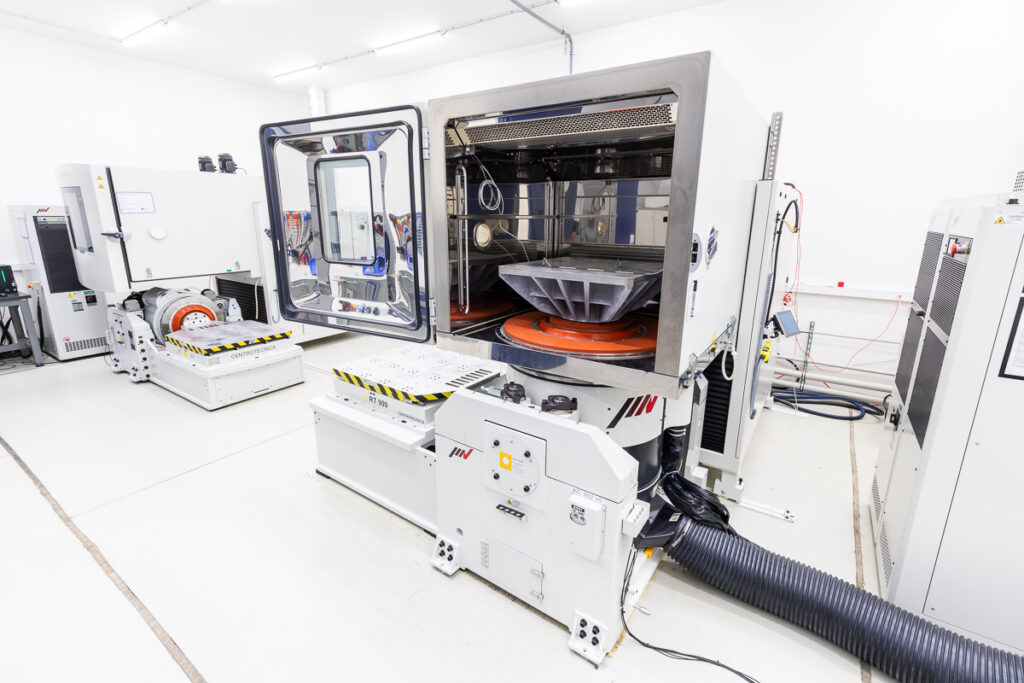
We also carry out vibration tests under conditions of high humidity up to 95 % r.h. thanks to a unique technology that protects the vibration system. Our chamber makes it possible to combine vibrations with controlled humidity and temperature even during horizontal tests, which ordinary laboratories often do not offer.
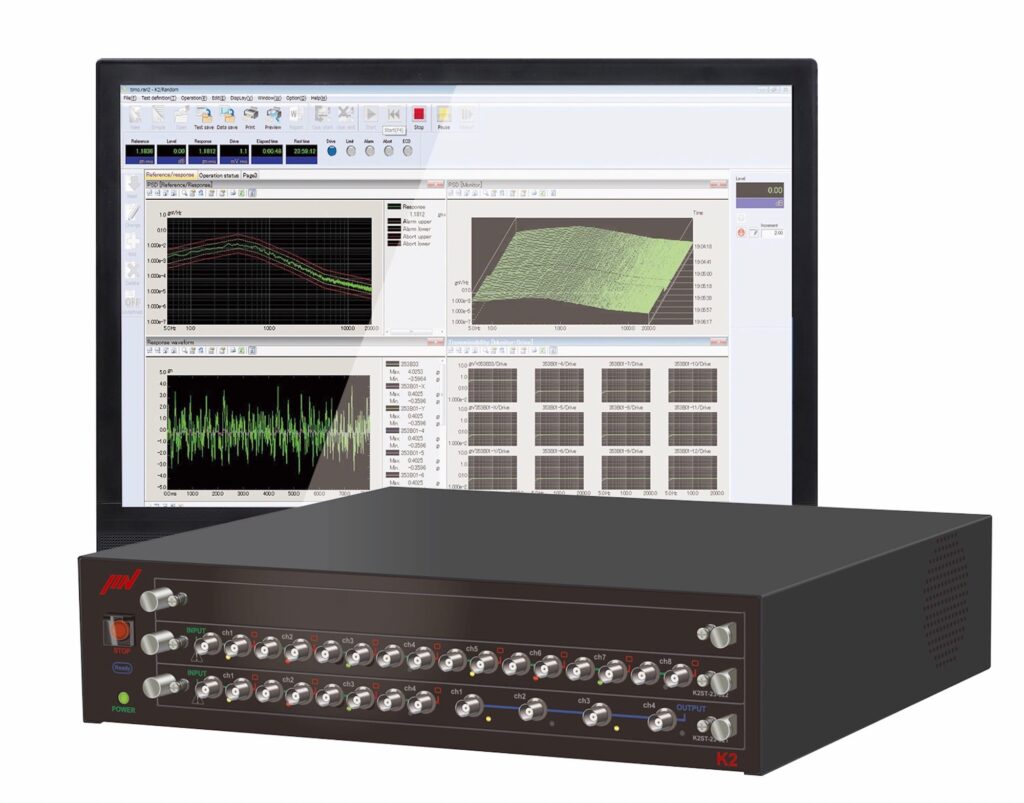
For a better analysis of the sample's behaviour, we are able to measure acceleration on up to 20 channels, which means, for example, a combination of 2 single-axis accelerometers for control and 6 three-axis accelerometers on the sample.
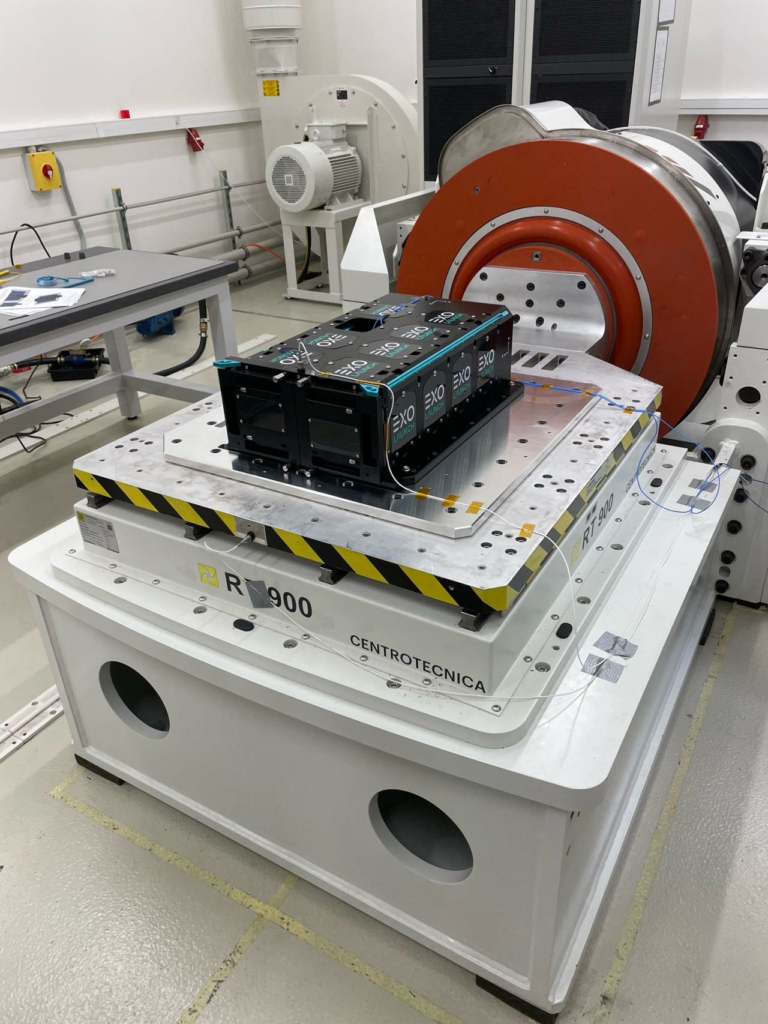
Vibration tests that simulate a rocket launch or the service-life tests of satellites (e.g. nanosat, microsat and minisat) or drones. These can be followed by tests in a thermal-vacuum chamber.
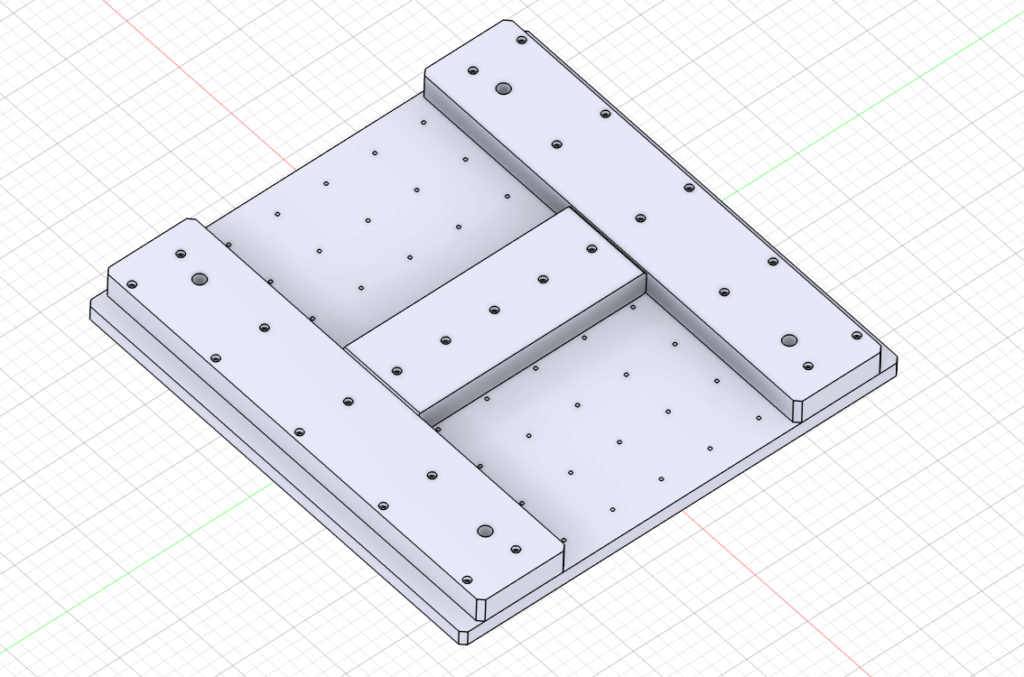
If the sample's clamping holes do not match the grid of clamping holes on the vibration system, we will arrange the design and manufacture of a clamping fixture for you.
We are accredited by the Czech Accreditation Institute in accordance with the ČSN EN ISO/IEC 17025:2018 standard in the field of external environment simulation.
This accreditation is official recognition that the testing laboratory meets the international requirements for:
the ability to perform tests or accurate and reliable measurements according to international standards
ensuring the consistency, traceability and credibility of results
Tell us your testing requirements (e.g. via the inquiry form, email or phone).
We contact you and clarify the test specification and timeline.
You receive a structured price quotation from us.
After your order we reserve the date and capacity.
You deliver the samples to us in person or by courier.
We carry out the test on the reserved date.
After the test we send the test report electronically.
We'll gladly go through the test results with you.
„The testing chamber, and the staff's approach and willingness beyond requirements — I can only recommend them.“
„JD Dvořák — a company where the impossible does not exist and where it is not only about work. I am glad to have the honour of working with JD Dvořák.“


„We have worked with JD Dvořák for a long time in testing, the rental of climatic chambers, and the service and calibration of our equipment. We value the helpfulness and professionalism of the department heads and technicians we are in regular contact with during tests and the work carried out. Our technicians also make use of training in various areas of testing, which provides both an expansion of theoretical knowledge and practical demonstrations.“

„What I greatly appreciate is the personal approach to solving every problem. Whether it concerned specific testing requirements or the need for individual consultation, I was always met with willingness and expert help that led to a smooth and efficient collaboration. For me, JD Dvořák is not only a professional company, but also an excellent partner in research and education.“

„We have worked with JD Dvořák since 2020. Since then we have completed several installations together, and throughout they have provided service and the necessary calibrations, always at the highest professional level. They have also helped us with our special requirements and we can always rely on them. Their approach is not only professional and customer-oriented, but also very human, and the cooperation is always pleasant.“

„Cooperation with JD Dvořák is at an excellent level, as proven by more than 20 years of trouble-free collaboration.“

„You do good work — thank you for the long-term cooperation.“

„Thank you for the professional cooperation so far. You are a very reliable partner for us.“

This document contains key information about the tested sample and the course of the test. We provide the report in Czech or English according to your needs.
We issue both an accredited and a non-accredited test report according to customer requirements. The type of report is determined by the chosen testing standard.
Not sure how to test your sample? We'll help. We have years of experience and will recommend the most suitable procedure. And if you already know exactly what you want, we'll be your partner — without unnecessary questions.
Our equipment covers most requirements. If something is missing, thanks to our links with manufacturers of testing technology we can often arrange even specialised equipment outside our laboratory.
You can rely on both the equipment and our arrangements. We service and calibrate everything ourselves, so we can react quickly and adapt tests to get you results as soon as possible.
Every job is unique to us. We always try to understand your needs and tailor the service exactly to what you expect.
We'll be happy to advise you.
Ing. Radek Lovětínský
Head of the testing laboratory
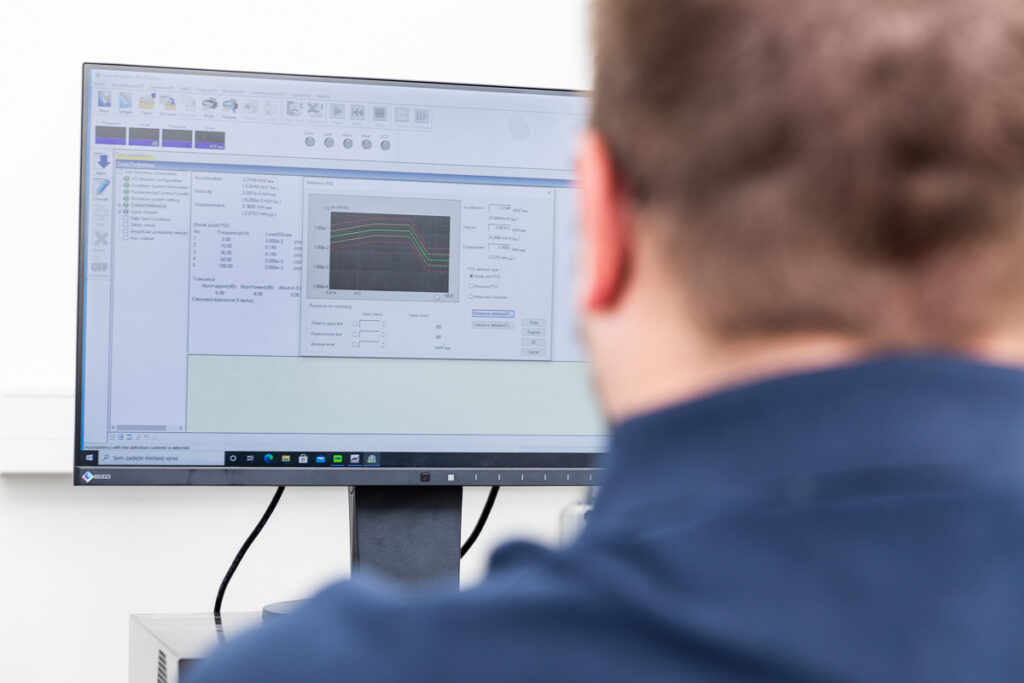
Yes, during the tests it is possible to test active samples, i.e. devices that are switched on and functional during testing. In such cases, various operating states can be simulated, including switching on and off according to a predefined scenario. If required, we are able to fully arrange the entire wiring of the tested sample, including the connection of measuring instruments, the setting of switching modes and the configuration of monitoring systems. For maximum control over the course of the test, we also offer online logging of electrical quantities, which allows continuous monitoring of key parameters such as voltage, current or temperature. Thanks to this, we can quickly identify any deviations or faults and react in time.
A combined test is recommended especially for devices intended for areas with extreme temperatures and humidity – such as electrical and electronic devices in the automotive industry, aviation or outdoor sensors. The combination of thermal stress with vibrations can lead to material degradation or poor connection of components, which standard tests may not reveal.
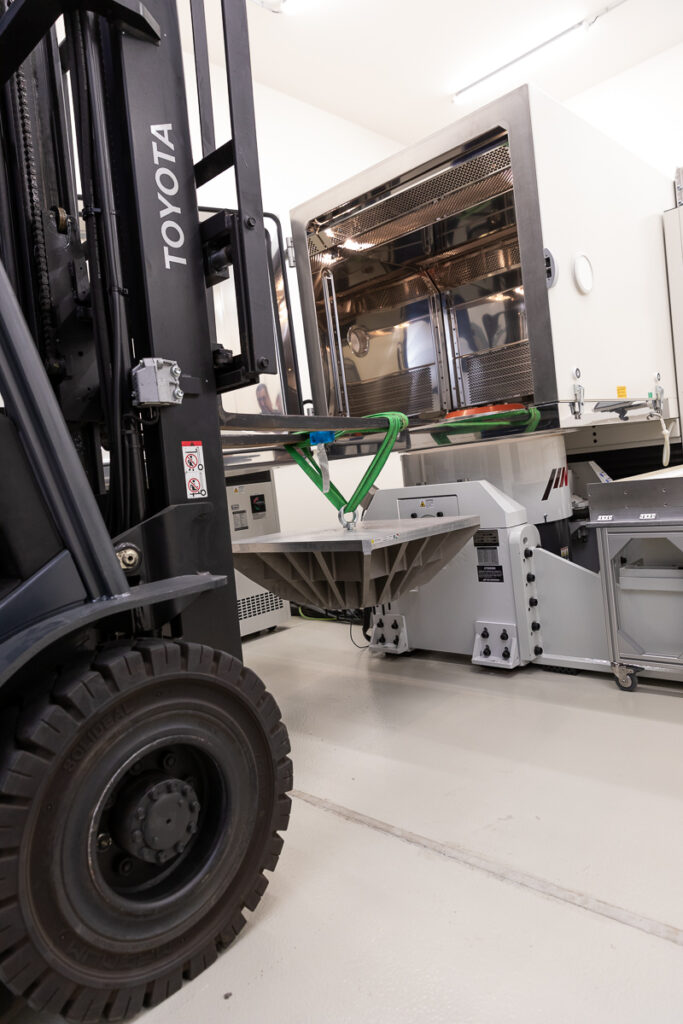
Changing the slip table from 900 × 900 mm to a smaller 450 × 450 mm means that the shaker no longer has to accelerate as much mass (the plate, the fixture and the sample), so at the same fixed force it can deliver significantly higher g – this is the physical principle F = m · a.
The fact that our control system has 20 channels does not mean 20 accelerometers, but 20 axes of measurement — each axis (e.g. X, Y or Z of one unit) uses its own channel. Thanks to this you can deploy, for example, six three-axis accelerometers (6 × 3 = 18 channels) or combine uniaxial sensors as needed, which simplifies covering the space around the sample. More channels mean more accurate localisation of vibrations, the possibility to set the average or maximum values across axes, and thus higher reliability and safety of the test