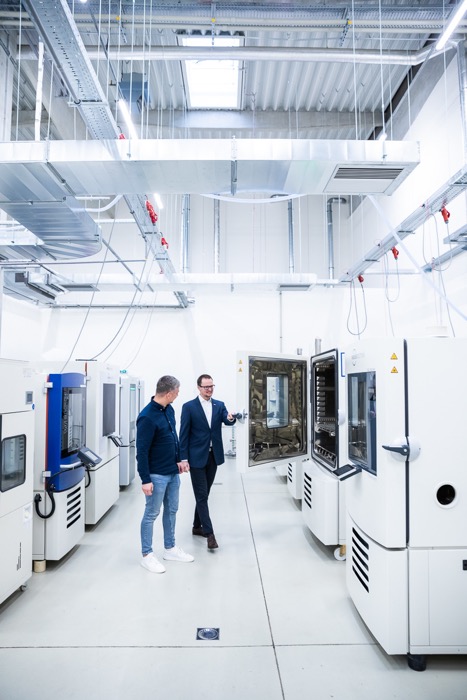
„The testing chamber, and the staff's approach and willingness beyond requirements — I can only recommend them.“
Tomáš Matús
Google review


In our laboratory we evaluate the degradation of materials, metallic and other surfaces, paints and coating systems before and after stress tests. We assess visible defects, changes in appearance, the extent of damage and signs of corrosion according to customer requirements and the relevant technical standards. The evaluation is particularly suitable after corrosion, climatic, condensation, UV and other exposure tests, when the condition of the surface treatment, the extent of degradation and any failure of the protective or decorative function of the coating need to be objectively documented.
The ČSN EN ISO 4628 series of standards is used to evaluate the degradation of the surface of materials, paints and coatings, in particular to classify the quantity and size of defects and the intensity of changes in appearance. In practice it is used to assess changes caused by ageing, weathering, UV radiation, humidity, corrosion or other stress.
The evaluation looks at typical signs of degradation of the surface treatment, such as blistering, rusting, cracking, flaking, chalking, delamination, and corrosion around a scribe or the formation of filiform corrosion. The result is a clear classification of the extent of damage, which helps to compare the resistance of individual coating systems and surfaces.
This evaluation is particularly suitable for:
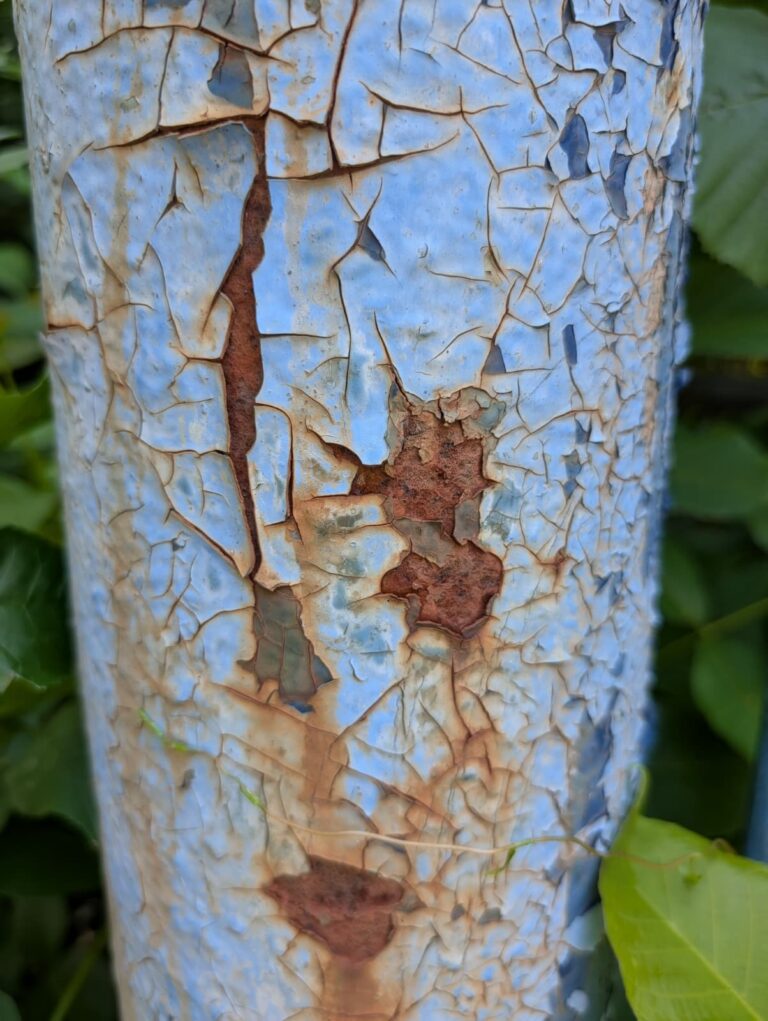
During degradation of the surface treatment a whole range of visible defects can occur. The most common include blistering, the formation of corrosion products, cracking of the coating or its flaking from the substrate.
These defects may signal insufficient surface preparation, unsuitable technology or application conditions, poor compatibility of layers, weak coating adhesion, low vapour permeability and moisture resistance, or an insufficient protective function of the surface treatment against corrosive attack or weathering with UV radiation. Timely laboratory evaluation helps determine the extent of damage and compare the behaviour of different systems after the same exposure.
The evaluation can be carried out, for example, according to these parts of the standard:
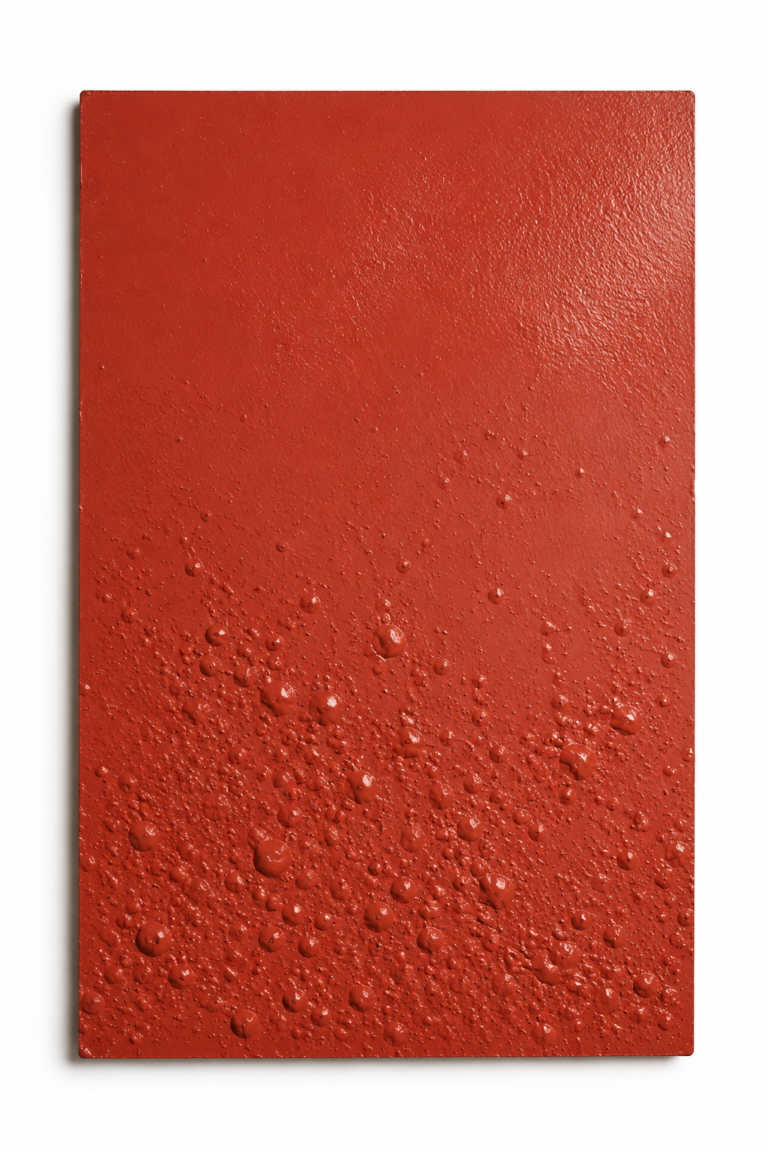
For paints and coating systems, changes that occur after weathering tests with UV radiation and humidity, climatic or corrosion tests are often evaluated as well. A typical example is chalking of the surface, i.e. the formation of a powdery layer due to degradation of the binder.
Evaluation of degradation around a scribe is important especially for protective coatings, where the system's ability to prevent the spread of damage from a defined artificial defect that simulates mechanical damage is assessed. The results help to evaluate the protective function of the coating and compare the resistance of individual surface treatments. A special case of evaluating corrosion at a scribe is filiform corrosion, which occurs especially on non-ferrous substrates such as aluminium alloys.
Applicable parts of the standard:
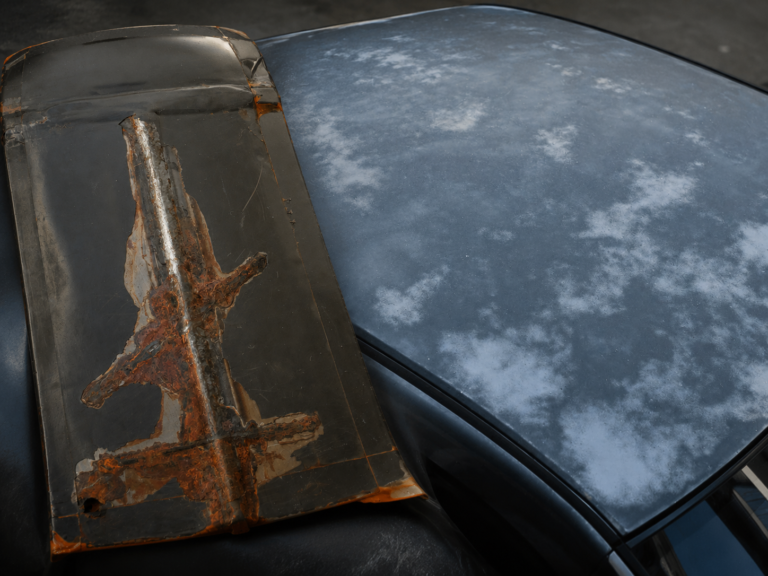
The ČSN EN ISO 10289 standard is used to evaluate test samples and products with metallic or other inorganic coatings on a metal substrate after corrosion and other exposure tests. It allows the protective function of the coating and its appearance after exposure to be assessed separately.
In practice, the following are evaluated in particular:
The output can be a protective rating Rp and an appearance rating Ra, supplemented by photo documentation and a verbal comment on the extent of damage.

We'll be happy to advise you.
Ing. Radek Lovětínský
Head of the testing laboratory
We carry out laboratory evaluation of surface degradation focused on assessing defects of paints, coatings, surfaces and other surface treatments. We evaluate blistering, degree of corrosion, cracking, flaking, chalking, delamination, corrosion around a scribe and filiform corrosion. As a matter of course we also apply standards other than just ISO, in particular according to customer requirements. The tests are suitable for quality control, development of coating systems, comparison of different surface-treatment technologies and validation of products after stress exposure. Most often we evaluate samples after salt spray, condensation tests, cyclic corrosion tests, UV exposure or long-term ageing under combined conditions. Our services also include photo documentation, a verbal description of the damage, classification of the extent of defects, comparison of a reference and an exposed sample, and follow-up microscopic analysis of selected defects. Our standard also includes interpretation of the results with a proposed solution or a statement of conformity with requirements.
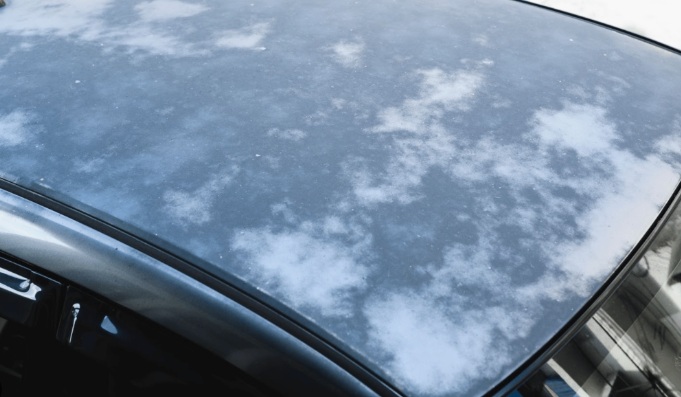
Evaluation of chalking, delamination, corrosion around a scribe and filiform corrosion serves to assess the degradation and protective function of paints and coating systems after UV, climatic or corrosion tests according to ČSN EN ISO 4628-6, 4628-8 and 4628-10.
Evaluation of blistering, rusting, cracking and flaking of coatings serves to assess visible defects, the extent of degradation and the protective function of surface treatments after exposure according to ČSN EN ISO 4628-2, 4628-3, 4628-4 and 4628-5.
Evaluation of paint and coating degradation according to ISO 4628 serves to classify defects and changes in the appearance of surface treatments after ageing, UV, climatic or corrosion exposure and makes it possible to compare the resistance of individual coating systems, technologies, suppliers or production batches.
In the field of surface degradation evaluation we work with standards for assessing defects of paints, coatings and surface treatments after stress tests. We assess each order individually according to the type of surface, the material of the product, the coating system and the purpose of the evaluation. We carry out tests for surfaces and surface treatments of industrial products and their parts. If needed, we will help you choose a suitable standard, test procedure or specification for evaluating samples after corrosion, climatic, UV or other exposure tests. Thanks to our competence and flexible scope of accreditation, we also carry out evaluations to standards other than just ISO, according to the customer’s wishes and requirements.
Tell us your testing requirements (e.g. via the inquiry form, email or phone).
We contact you and clarify the test specification and timeline.
You receive a structured price quotation from us.
After your order we reserve the date and capacity.
You deliver the samples to us in person or by courier.
We carry out the test on the reserved date.
After the test we send the test report electronically.
We'll gladly go through the test results with you.
„The testing chamber, and the staff's approach and willingness beyond requirements — I can only recommend them.“
„JD Dvořák — a company where the impossible does not exist and where it is not only about work. I am glad to have the honour of working with JD Dvořák.“


„We have worked with JD Dvořák for a long time in testing, the rental of climatic chambers, and the service and calibration of our equipment. We value the helpfulness and professionalism of the department heads and technicians we are in regular contact with during tests and the work carried out. Our technicians also make use of training in various areas of testing, which provides both an expansion of theoretical knowledge and practical demonstrations.“

„What I greatly appreciate is the personal approach to solving every problem. Whether it concerned specific testing requirements or the need for individual consultation, I was always met with willingness and expert help that led to a smooth and efficient collaboration. For me, JD Dvořák is not only a professional company, but also an excellent partner in research and education.“

„We have worked with JD Dvořák since 2020. Since then we have completed several installations together, and throughout they have provided service and the necessary calibrations, always at the highest professional level. They have also helped us with our special requirements and we can always rely on them. Their approach is not only professional and customer-oriented, but also very human, and the cooperation is always pleasant.“

„Cooperation with JD Dvořák is at an excellent level, as proven by more than 20 years of trouble-free collaboration.“

„You do good work — thank you for the long-term cooperation.“

„Thank you for the professional cooperation so far. You are a very reliable partner for us.“

This document contains key information about the tested sample and the course of the test. We provide the report in Czech or English according to your needs.
We issue both an accredited and a non-accredited test report according to customer requirements. The type of report is determined by the chosen testing standard.
Not sure how to test your sample? We'll help. We have years of experience and will recommend the most suitable procedure. And if you already know exactly what you want, we'll be your partner — without unnecessary questions.
Our equipment covers most requirements. If something is missing, thanks to our links with manufacturers of testing technology we can often arrange even specialised equipment outside our laboratory.
You can rely on both the equipment and our arrangements. We service and calibrate everything ourselves, so we can react quickly and adapt tests to get you results as soon as possible.
Every job is unique to us. We always try to understand your needs and tailor the service exactly to what you expect.
We'll be happy to advise you.
Ing. Radek Lovětínský
Head of the testing laboratory
Surface degradation evaluation serves to objectively assess defects and appearance changes of paints, coatings and other surface treatments. It helps determine whether, after exposure, blistering, rusting, cracking, flaking, chalking, delamination or other surface damage has occurred.
The evaluation is particularly suitable after corrosion, climatic, condensation, UV or long-term exposure tests. It is also used for quality control, development of new coating systems, comparison of suppliers or handling complaints.
ČSN EN ISO 4628 is used mainly to evaluate defects and appearance changes of paints and coatings, such as blistering, rusting, cracking, flaking, chalking or delamination. ČSN EN ISO 10289 is used to evaluate metallic and inorganic coatings on a metal substrate after corrosion tests, including protective and appearance rating.
The output is normally a test report with a classification of defects according to the relevant standard and customer requirements, photo documentation, a verbal description of the degradation and a comparison of the reference and exposed sample. We always adapt the scope of the output to the type of surface, the customer's requirements and the purpose of the test.